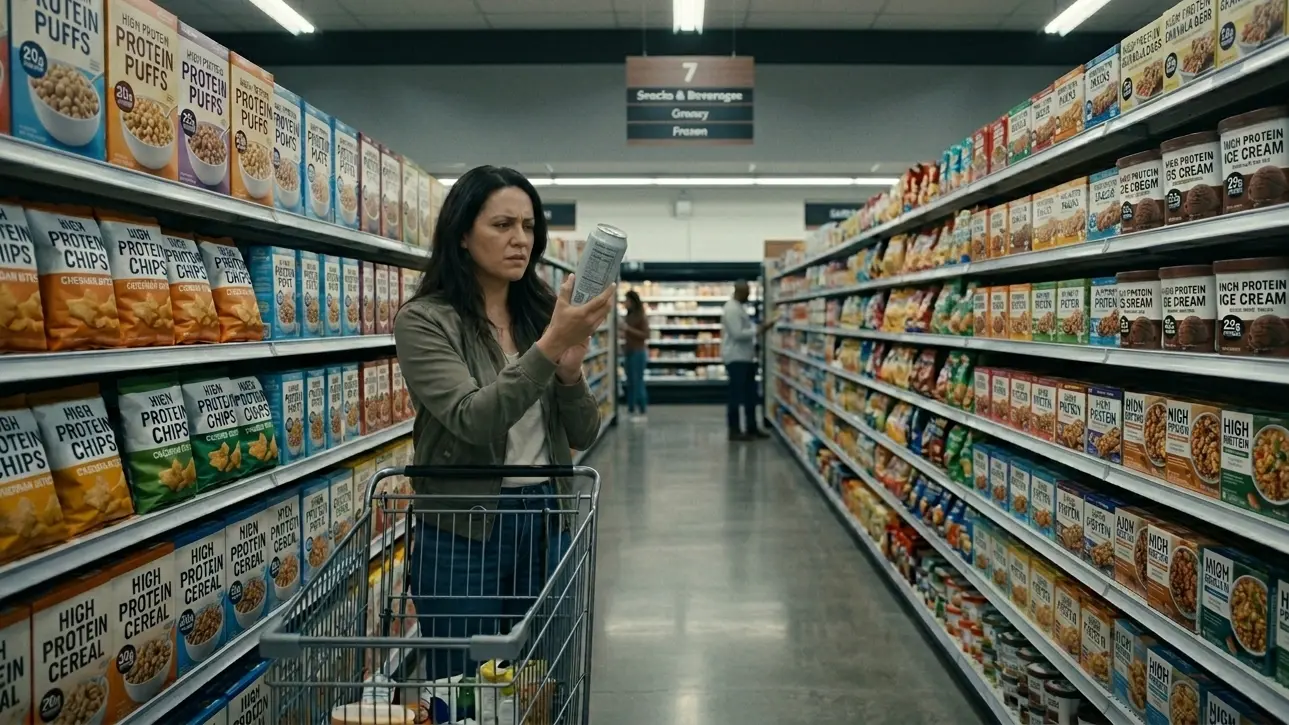
Something changed in the American grocery store over the past year, and it did not happen quietly. Protein intake among U.S. adults has become the single biggest driver of what people put in their carts, what snacks they buy, and which food companies are growing fastest.
The numbers confirm it. According to National Health and Nutrition Examination Survey data from the 2021–2023 cycle, the average American adult now consumes approximately 82.6 grams of protein per day, with animal sources accounting for 56.1 grams of that total and plant sources making up the remaining 26.5 grams.
What is new in 2026 is not that Americans like protein. It is that federal guidelines, a wave of weight-loss medications, and shifting consumer priorities have all pushed in the same direction at the same time, and food companies are scrambling to keep up.
The Federal Guidelines Changed What “Eating Well” Actually Means
For decades, the standard nutrition conversation in America centered on cutting fat, watching carbs, or counting calories. The 2025–2030 Dietary Guidelines for Americans shifted that framing. The updated guidance explicitly emphasizes nutrient-dense, minimally processed protein sources as a foundation for healthy eating, particularly to support muscle retention and healthy aging.
This is not a minor wording update. When the federal government formally repositions protein as a priority for all adults, not just athletes or bodybuilders, it changes how dietitians advise patients, how school lunch programs are designed, and how food manufacturers label and market their products.
The practical effect for everyday shoppers is already visible. Packaged goods that once led with “low fat” or “low sugar” now lead with “20g of protein per serving.” Snack bars, yogurts, frozen meals, and even breakfast cereals are reformulating or rebranding around protein content.
Consumer acceptability research published on PubMed in 2026 found that high protein content and satiety have become the top two reasons Americans choose a snack product, ranking above brand loyalty and price for the first time. That is a genuine shift in what moves product off a shelf.
Protein quality also matters in ways most labels do not explain. Edamame, for example, delivers 10 grams of protein for approximately 100 calories, making it one of the most efficient plant-based protein sources available at a typical grocery store. The USDA tracks this type of “protein-to-calorie” ratio in its agricultural and nutritional data, and food companies have begun using similar metrics internally to justify product reformulations and new product launches targeting health-conscious buyers.
GLP-1 Medications Are Quietly Reshaping the Food Market
One of the most significant but least-discussed forces behind the 2026 protein trend is the rapid spread of GLP-1 receptor agonists, the class of prescription weight-loss and diabetes medications that includes Ozempic and Wegovy.
Research published in 2026 in the American Economic Association journal found a 12.4 percent shift toward high-protein, lean-meat consumption among GLP-1 users, driven by two specific needs: appetite suppression means people eat less overall, so every bite has to count nutritionally, and maintaining lean muscle mass while losing weight requires prioritizing protein above other macronutrients.
This matters at the grocery store level because GLP-1 use in the United States has grown fast enough to create a measurable consumer segment. Major food manufacturers are tracking it directly. SEC filings from companies like Tyson Foods and Nestlé show documented corporate pivots toward protein-fortified and clean-label snack segments that specifically target consumers managing their appetite and weight through medication.
The food industry does not move this quickly without a real demand signal behind it. When millions of Americans are eating smaller portions and choosing foods with deliberate nutritional purpose, the products that win shelf space are the ones with strong protein numbers and simple ingredient lists.
The IFIC 2025–2026 Food and Health Survey confirmed the broader cultural shift that underlies this. Consumer perception of protein has changed substantially. It is no longer associated primarily with gym culture or sports supplements. Americans now connect high protein intake with blood glucose management, weight control, and long-term metabolic health.
That shift in perception explains why protein is now a mainstream grocery marketing claim rather than a niche fitness one. It also explains why fast food menu prices have climbed steadily as chains add premium protein options, a trend covered in detail in this piece on fast food prices and this breakdown of why fast food costs more now.
What This Means for What You Pay at the Grocery Store
Higher demand for protein-rich foods creates upward price pressure across multiple categories simultaneously. The USDA Agricultural Projections to 2035, released in early 2026, outlines commodity trends showing sustained demand for poultry, dairy, and soy — the three ingredient categories most affected by the protein shift.
The USDA Economic Research Service tracks retail food price data and notes that commodity price increases at the producer level typically take three to six months to translate fully into shelf prices, meaning price changes visible in mid-2026 reflect supply decisions made in late 2025.
Greek yogurt, eggs, canned chicken, edamame, and cottage cheese have all seen increased shelf presence and pricing adjustments at major retail chains. Plant-based protein products, which struggled commercially in 2022 and 2023, are seeing a quiet recovery as consumers who use GLP-1 medications seek protein from non-meat sources to diversify intake.
The USDA’s November 2025 World Agricultural Supply and Demand Estimates report, which tracks inventory levels for poultry, dairy, and soy, shows that supply has kept pace with demand increases so far, which has prevented the more extreme price spikes seen in egg and beef markets in prior years.
For everyday shoppers, the practical read on the current market is this: protein-rich whole foods — eggs, canned fish, legumes, plain Greek yogurt, still represent strong nutritional value per dollar. The products most likely to carry a price premium are the reformulated packaged snacks and bars using protein as a marketing headline, where the per-gram cost of protein is substantially higher than in whole food sources.
Where Things Stand
American protein intake has reached a measurable baseline, federal dietary guidelines now formally prioritize it at every life stage, and GLP-1 adoption has produced a consumer segment actively reshaping product development and grocery pricing across multiple categories. Food companies have already committed, reformulated products, new snack launches, and corporate pivots toward clean-label protein are in market or arriving before year-end.
What remains uncertain is whether demand holds at this intensity as GLP-1 prescriptions stabilize and as household budget pressure pushes some shoppers back toward lower-cost staples. For now, protein is not a trend the food industry is watching, it is the organizing principle around which the American food supply is being rebuilt in real time.
Disclaimer: AmericanFoodRecipe.com is an independent editorial publication. This content is for informational purposes only. For official guidance on food safety, nutrition, and labeling, please visit the relevant .gov website or consult a qualified nutrition professional.