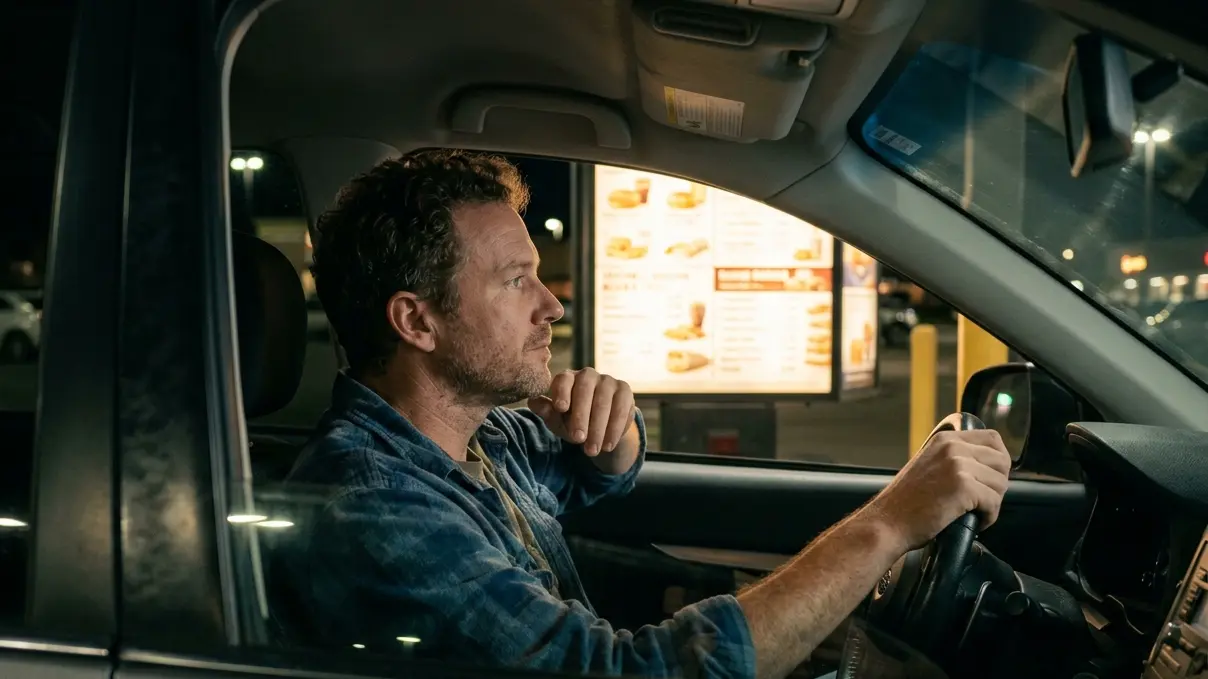
At some point in the last few years, the drive-thru stopped being the obvious choice. Not because the food changed. Not because the experience improved or declined dramatically. Because the price stopped feeling automatic.
Data from the USDA Economic Research Service now confirms what Americans are already sensing at the window: restaurant prices are consistently outpacing grocery prices, and they have been for long enough that the gap is changing how people decide where their next meal comes from.
What Made Fast Food Affordable
Fast food stayed cheap for decades because its cost structure was engineered to keep it that way. Wages were low and accepted as part of the model. Ingredients were purchased through national supply contracts at volumes that drove per-unit costs to a minimum. High customer turnover spread fixed operating costs thin enough that individual meals could be priced for near-universal access.
A family of four could eat a full meal at a major chain for under twenty dollars well into the 2010s. Value menus and dollar tiers were standard features across virtually every chain. Most importantly, eating at a drive-thru cost roughly the same as cooking a comparable meal at home, and required none of the time or effort.
That price parity between eating out and eating in was not a marketing claim. It was a structural reality that made fast food economically rational for working families, lower-income households, and anyone making a practical decision about where to spend limited food dollars.
When the Price Gap Became Visible
The value contract did not break overnight. It eroded through a widening gap between two numbers that most consumers track by feel rather than by calculation, what groceries cost and what restaurants cost.
According to the USDA Economic Research Service, food-away-from-home prices rose 4.1% in 2024 and 3.8% in 2025, while food-at-home prices rose just 1.2% in 2024 and 2.3% in 2025. That is more than three times the grocery rate in 2024, and more than one and a half times in 2025.
When restaurant prices rise at triple the speed of grocery prices across two consecutive years, the casual economics of eating out begin to shift in people’s minds. The drive-thru stops being a default and starts being a decision. Consumers who never compared these two numbers consciously are now doing it instinctively, not because they read a government report, but because they feel the gap widen every time they pull up to the window.
That perceptual shift is the first sign the old affordability model has structurally changed.
What Is Driving the Increase
Two cost pressures are doing the work simultaneously, and neither is showing signs of reversing.
The first is labor. Fast food kept prices low partly by keeping wages low. As states have raised minimum wage floors, several now at or above fifteen dollars per hour, with California’s fast food sector mandating twenty dollars per hour, operators running on thin franchise margins have had to respond. Labor is the single largest operating cost at most fast food locations. There is limited room to absorb a meaningful wage increase without passing it through to the menu. The franchise model, which separates brand ownership from restaurant operation, gives individual operators little flexibility to respond any other way.
The second pressure is beef. The U.S. cattle herd has been in a documented cyclical contraction, fewer animals entering the supply chain at a time when consumer demand remains strong. According to the USDA Economic Research Service, farm-level cattle prices in March 2026 were 16.2% higher than they were in March 2025, and wholesale beef prices rose 19.7% over that same twelve-month period. Beef is the core ingredient across most major fast food menus. A sustained 20% increase at the wholesale level does not stay there. It moves through procurement, prep, and packaging, and eventually arrives on the menu board.
What the USDA Data Confirms
The USDA Economic Research Service publishes its Food Price Outlook monthly, tracking price changes across every major food category using Consumer Price Index and Producer Price Index data. It is the primary federal source for food price measurement and forecasting in the United States.
Its findings are direct. Food-away-from-home prices were 3.8% higher in March 2026 than they were in March 2025. Looking ahead, the agency projects food-away-from-home prices will increase 3.6% across all of 2026, a figure that sits above the 20-year historical average annual increase of 3.5% for restaurant prices. On beef specifically, the USDA Economic Research Service projects beef and veal prices will rise an additional 6.3% in 2026, compounding the wholesale increases of nearly 20% already recorded through the first quarter of the year.
Restaurant price inflation is not just continuing. According to the federal government’s own food price tracking system, it is running ahead of its own long-term norm.
How Behavior Is Changing
When a habitual, low-thought expense starts requiring deliberate consideration, spending patterns adjust, not dramatically, but in ways that are now clearly visible inside the industry.
Lower-income households, which historically depended on fast food as a practical and reliably affordable option, are pulling back most noticeably. Grocery store prepared foods, rotisserie chicken, deli items, packaged meal options, are absorbing a measurable share of that displaced demand.
Among consumers who continue eating fast food, ordering behavior has shifted: drinks get dropped, sides get skipped, and the choice of chain increasingly comes down to whichever one still offers a credible low-cost option. Value menus, where they still exist, are no longer a background feature. They are the primary reason a portion of the customer base shows up at all.
The decision that once happened automatically, based on convenience and habit, is now conscious and cost-driven. That shift in how people make the choice is the clearest real-world signal that the structural repricing tracked in the federal data is landing exactly where it would be expected to land.
Where Things Stand
The USDA Economic Research Service projects food-away-from-home prices will rise 3.6% in 2026, above the agency’s own 20-year historical average of 3.5%. Wholesale beef costs are running nearly 20% higher than a year ago. Restaurant prices are increasing at more than double the rate of grocery prices. The structural pressures driving these figures, cattle supply contraction, rising labor costs, and sustained ingredient price inflation, are not expected to ease in the near term.
Fast food is still fast. It is no longer reliably cheap.