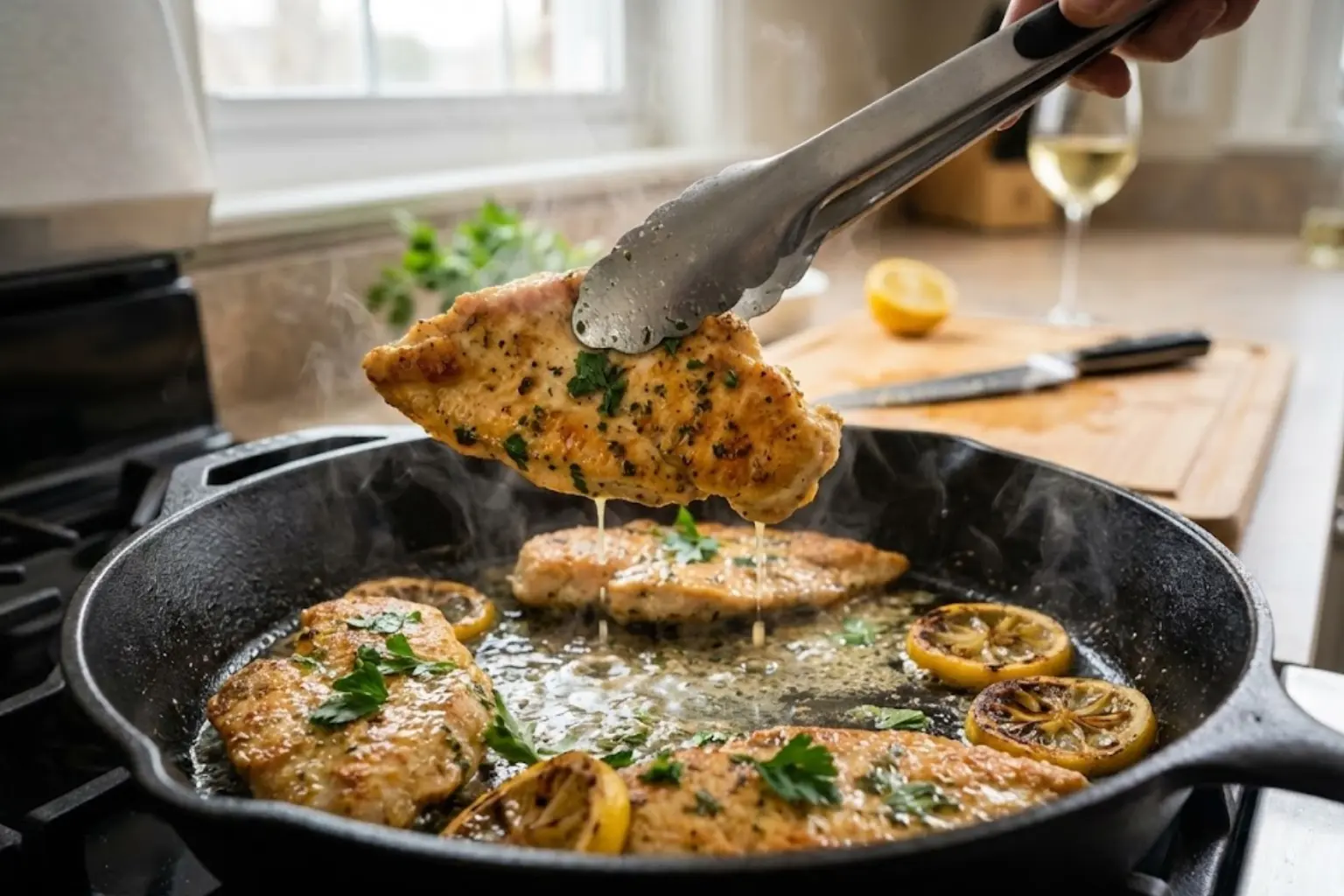
This Simple Chicken Dinner Comes Together in Just 20 Minutes
Weeknights don’t leave much room for complicated plans. You get home, you’re hungry, and the last thing you want is a sink full of dishes or a recipe that asks for thirty minutes of “prep.” You want something hot, familiar, and dependable, the kind of dinner that feels real, not rushed.
This chicken dinner is built for that moment. It comes together fast, uses ingredients most American kitchens already have, and delivers a full, satisfying plate without asking you to babysit the stove. No marinating. No specialty equipment. Just a clear method that works when time is tight and energy is low.
It’s the kind of meal people return to again and again, not because it’s flashy, but because it shows up when you need it.
Time Breakdown
What This Is And Isn’t
This is a straightforward American home-kitchen chicken dinner designed for speed and reliability. It’s pan-cooked, lightly sauced, and meant to go from fridge to table in about twenty minutes.
It is not a restaurant-style reduction or a chef-driven technique. There’s no brining, no resting schedule, and no advanced timing tricks. The method is forgiving, flexible, and built around visual cues rather than exact measurements.
If you’re looking for something impressive but realistic, something that works on a Tuesday, not just a Saturday, this fits that role.
Ingredient Snapshot
- Boneless, skinless chicken breasts
Lean, quick-cooking, and widely available in US grocery stores. - Olive oil or neutral cooking oil
Helps the chicken brown evenly without sticking. - Butter
Adds richness and rounds out the flavor at the end. - Garlic (fresh, minced)
Provides aroma and depth without overpowering the dish. - Chicken broth
Creates a light pan sauce and keeps the chicken moist. - Salt
Enhances the natural flavor of the chicken. - Black pepper
Adds mild warmth and balance. - Optional herbs (parsley or thyme)
For a clean finish and familiar American flavor profile.
Before cooking begins, the following technical standards define the temperature, heat, and storage limits used throughout this recipe.
Technical & Safety Reference
| Technical Variable | Requirement / Standard | Source Framework |
|---|---|---|
| Cooking method | Stovetop pan-cooking over medium to medium-high heat | Culinary practice |
| Visual doneness indicator | Chicken turns golden brown and feels firm when cooked | Culinary science |
| Garlic heat exposure | Garlic added after chicken and cooked briefly to prevent burning | Culinary science |
| Sauce reduction | Broth simmered until slightly reduced before finishing | Culinary technique |
| Refrigerated storage | Leftovers stored in airtight container up to 3 days | U.S. food safety guidelines |
| Reheating method | Gentle stovetop reheating with added liquid; avoid high heat | U.S. food safety guidelines |
Why It Works
This dinner works because it respects timing and heat, two things that matter more than complicated techniques.
Thin, evenly sized chicken pieces cook quickly and predictably. A hot pan creates browning before the meat dries out. Adding liquid at the right moment loosens the flavorful bits left behind in the pan, turning them into a simple sauce instead of letting them burn.
Butter is added last, not for show, but because it softens the edges of the dish. It smooths the flavors and gives the sauce a light body without making it heavy.
Nothing here is rushed. It’s just efficient.
Step-by-Step Method
Prepare the chicken
Pat the chicken breasts dry with paper towels and season both sides evenly with salt and black pepper. If the pieces are thick, slice them horizontally to create thinner cutlets. This helps them cook evenly and faster.
Heat the pan
Place a large skillet over medium-high heat and add the oil. The oil should shimmer but not smoke. This tells you the pan is hot enough to sear.
Cook the chicken
Lay the chicken in the pan without crowding. Cook for about 4–5 minutes on the first side, until golden brown. Flip and cook the second side for another 3–4 minutes. The chicken should feel firm and release easily from the pan when ready.
Remove and rest briefly
Transfer the chicken to a plate. This short rest keeps it juicy while you finish the sauce.
Add garlic
Lower the heat to medium. Add the garlic to the same pan and stir for about 20–30 seconds, just until fragrant. If it starts to darken, move to the next step immediately.
Deglaze with broth
Pour in the chicken broth and scrape the bottom of the pan with a spoon. Let it simmer for 2–3 minutes until slightly reduced.
Finish with butter
Add the butter and stir until melted and glossy. Return the chicken to the pan and spoon the sauce over the top for about 1 minute.
Serve
Remove from heat. Finish with herbs if using, and serve immediately while hot.
Common Mistakes to Avoid
- Overcrowding the pan
Too much chicken at once traps steam and prevents browning. Cook in batches if needed. - Cooking on low heat
Chicken cooked too gently will turn pale and dry before it browns. - Adding garlic too early
Garlic burns quickly. It should go in after the chicken is out of the pan. - Skipping the rest
Even a short rest helps the chicken stay moist when it goes back into the sauce.
Variations
- Steakhouse-Style
Add a splash of Worcestershire sauce to the pan sauce and finish with cracked black pepper. - Scampi-Inspired
Add a squeeze of lemon and a pinch of red pepper flakes at the end. - Bread-Dipping Version
Increase the broth slightly and serve with crusty bread to soak up the sauce.
Storage, Reheating & Food Safety
- Store leftovers in an airtight container in the refrigerator for up to three days.
- To reheat, warm gently in a skillet over medium-low heat with a splash of broth or water. Avoid microwaving on high, which can dry out the chicken.
- Chicken should be reheated until hot throughout before serving.
How Americans Commonly Use This
This kind of chicken dinner shows up everywhere, paired with mashed potatoes, spooned over rice, or served alongside steamed vegetables. It’s common in weeknight rotations because it adapts easily to what’s already in the fridge.
It works for family dinners, quick meals after work, and simple meal prep without feeling repetitive.
A Reliable Way to End the Day
This isn’t a recipe built to impress strangers online. It’s built to work, reliably, calmly, and without stress. When dinner needs to happen fast, and you still want it to feel like a real meal, this method holds up.
It’s simple on purpose. And that’s exactly why it lasts.
Editorial Transparency Statement
This article is research-based and informed by historical culinary references, established food science, and professional instructional standards. It does not rely on personal kitchen testing.
All content in this recipe is independently verified using authoritative and verifiable sources.
Sources used for this recipe:
-
USDA Food Safety and Inspection Service — Leftovers and Food Safety
https://www.fsis.usda.gov/food-safety/safe-food-handling-and-preparation/food-safety-basics/leftovers-and-food-safety -
USDA Ask — What Are Suggested Refrigerator Storage Times for Chicken?
https://ask.usda.gov/s/article/What-are-suggested-refrigerator-storage-times-for-chicken -
USDA Ask — How Many Times Can I Reheat Foods?
https://ask.usda.gov/s/article/How-many-times-can-I-reheat-foods
These references ensure the recipe is research-backed, historically accurate, US-centric, and safe for home cooking.
Author