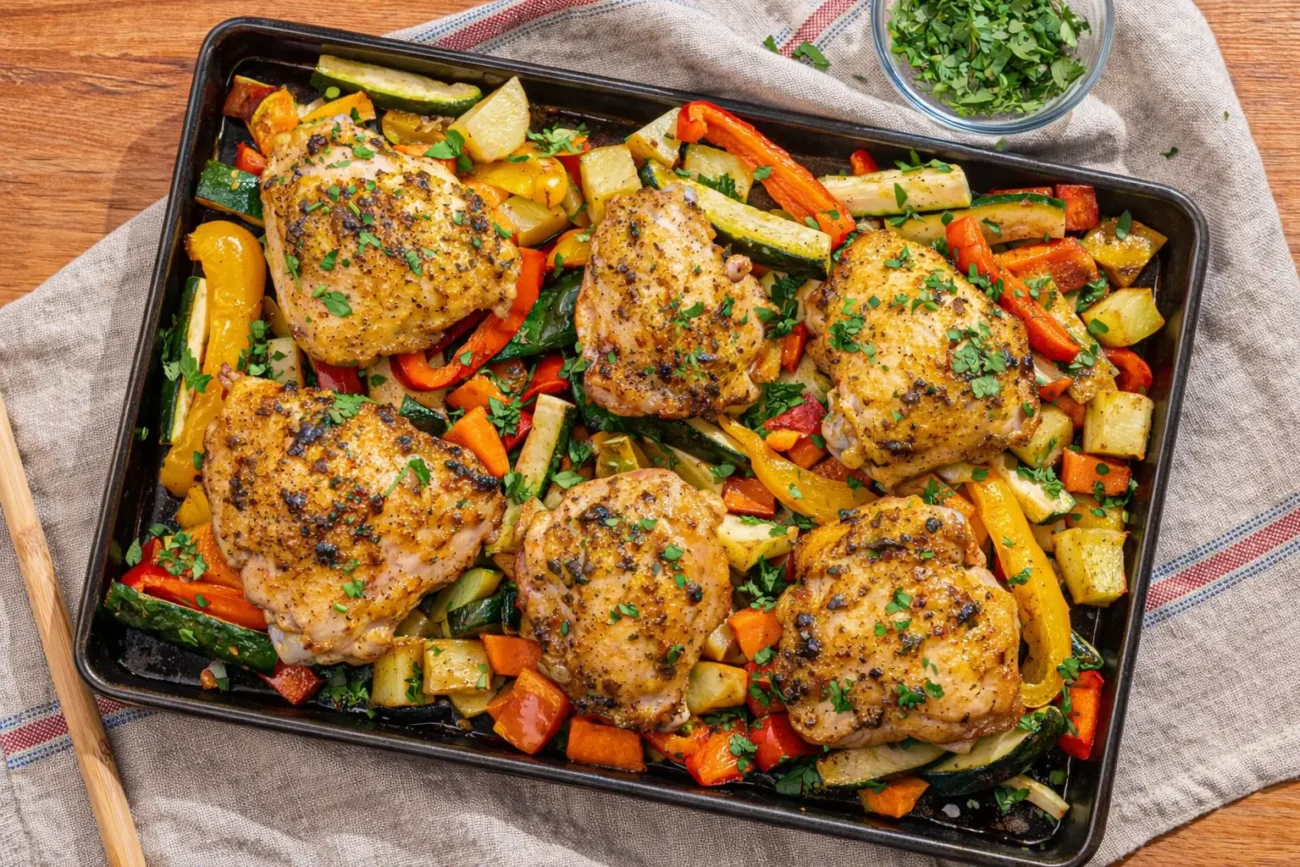
Chicken thighs emerging from a hot oven at 425°F develop a deep golden surface while vegetables around them darken at the edges and soften in the center. This transformation happens because dry circulating heat removes surface moisture while fats render and sugars concentrate.
On a properly spaced sheet pan, chicken skin browns while vegetables caramelize rather than steam. The result is a unified roasted dish where protein and vegetables finish cooking at nearly the same time.
This outcome depends less on seasoning than on roasting mechanics. Sheet pan chicken with roasted vegetables succeeds when ingredients are exposed to high dry heat and arranged so moisture can escape instead of collecting beneath them.
One practical rule governs the entire method: ingredients should sit in a single layer with visible space between pieces. At 425°F, that spacing allows chicken skin to brown while vegetables caramelize instead of turning soft and pale.
Why Chicken and Vegetables Roast Well Together
Roasting works because ovens provide dry, circulating heat. Unlike stovetop cooking, where heat concentrates at a single contact point, an oven surrounds food with hot air. On a sheet pan, this environment allows chicken and vegetables to cook simultaneously while maintaining separate textures.
Chicken thighs are particularly well suited to this environment. Their higher fat content helps protect the meat from drying while also assisting surface browning. As the fat renders, it coats nearby vegetables, helping them roast more efficiently.
Vegetables respond to roasting differently depending on their water and sugar content. As moisture evaporates, natural sugars concentrate and begin to caramelize. This is why roasted vegetables develop darker edges and a sweeter flavor than their raw counterparts.
When chicken and vegetables share the same sheet pan, they create a complementary cooking system. The chicken contributes rendered fat that improves vegetable browning, while the vegetables absorb heat without interfering with the chicken’s surface drying.
Choosing Vegetables That Match Chicken’s Cooking Timeline
Not all vegetables roast at the same speed. Their density, water content, and sugar concentration determine how long they require in the oven.
Fast-roasting vegetables
Examples: zucchini, bell peppers, mushrooms
These vegetables contain high water content and soften quickly at roasting temperatures. They cook in roughly 15–20 minutes and should be cut into larger pieces so they do not collapse before the chicken finishes roasting.
Medium-density vegetables
Examples: broccoli, cauliflower, onions
These vegetables roast in approximately the same time frame as chicken thighs. When cut into bite-size florets or wedges, they caramelize within 25–30 minutes at 425°F.
Dense root vegetables
Examples: carrots, potatoes, parsnips
Dense vegetables require more time to soften because their cell structure is tightly packed. Cutting them into smaller pieces increases surface area, allowing heat to penetrate more quickly and promoting caramelization.
Balancing these vegetable categories ensures that everything finishes cooking together rather than producing a pan with overcooked vegetables and undercooked chicken.
Ingredients and Their Function in High-Heat Roasting
Ingredients
- 1½ pounds bone-in, skin-on chicken thighs
- 2 cups broccoli florets
- 1 red bell pepper, sliced
- 1 medium red onion, cut into wedges
- 2 medium carrots, sliced into thick rounds
- 3 tablespoons olive oil
- 1 teaspoon kosher salt
- ½ teaspoon black pepper
- 1 teaspoon garlic powder
- 1 teaspoon paprika
- 1 tablespoon lemon juice (optional)
Why These Ingredients Work
Chicken thighs
Thigh meat contains more intramuscular fat than breast meat. This fat melts during roasting and helps prevent the meat from drying while also aiding surface browning.
Olive oil
Oil improves heat transfer from the pan and oven air to the food surface. This encourages the Maillard reaction, the chemical process responsible for browned flavors.
Root and cruciferous vegetables
Carrots and broccoli tolerate high roasting temperatures and develop caramelized edges while remaining tender inside.
Seasonings
Salt draws moisture from the chicken surface, which helps the skin dry and brown more efficiently during roasting.
Equipment That Produces Even Roasting
A rimmed sheet pan is essential. The rim prevents rendered fat and vegetable juices from spilling into the oven while still allowing airflow across the cooking surface.
Heavy-gauge aluminum or stainless steel sheet pans conduct heat efficiently and help maintain stable roasting temperatures. Thin pans heat unevenly and may cause vegetables near the edges to burn before the chicken cooks through.
A digital meat thermometer provides the most reliable indicator of doneness. Visual cues alone cannot confirm safe internal temperatures.
Step-by-Step Method for Sheet Pan Chicken with Roasted Vegetables
Prep Time: 10 minutes
Cook Time: 30 minutes
Total Time: 40 minutes
Servings: 4
Cooking Method: Oven roasting
Primary Equipment: Rimmed sheet pan, mixing bowl, thermometer
Difficulty Level: Easy
Instructions
- Preheat the oven
Set the oven to 425°F. This temperature encourages rapid surface drying and browning while still allowing vegetables to soften before burning. - Prepare the vegetables
In a large bowl, combine broccoli, bell pepper, onion, and carrots. Toss with 1½ tablespoons olive oil, salt, and half of the spices until evenly coated. - Season the chicken
Pat chicken thighs dry with paper towels. Coat with the remaining olive oil and spices. Dry skin browns more effectively during roasting. - Arrange ingredients on the sheet pan
Spread vegetables across the pan in a single layer. Place chicken thighs skin-side up among the vegetables, leaving small gaps between pieces. - Roast in the oven
Roast for 25–30 minutes. During this time the chicken skin will begin to brown while vegetables soften and caramelize. - Check internal temperature
Insert a thermometer into the thickest part of the chicken thigh. The safe internal temperature is 165°F according to USDA food safety guidance. - Rest briefly before serving
Allow the chicken to rest for about 5 minutes. Resting permits juices to redistribute within the meat.
Why Spacing on the Sheet Pan Controls Browning
Crowded sheet pans are the most common cause of pale chicken skin and soggy vegetables. When ingredients sit too close together, moisture released during cooking becomes trapped between them.
Instead of evaporating, that moisture turns into steam. Steam lowers surface temperatures and prevents the Maillard reaction from occurring. Without sufficient surface drying, chicken skin remains soft and vegetables soften rather than caramelize.
Spacing ingredients solves this problem by allowing hot air to circulate freely around each piece of food. With moisture escaping quickly, surfaces remain dry enough to brown. This single adjustment often determines whether sheet pan chicken produces crisp roasted textures or steamed results.
Food Safety, Storage, and Reheating
Chicken must reach an internal temperature of 165°F to be considered safe to eat. A thermometer inserted into the thickest portion of the meat provides the most accurate reading.
Leftovers can be stored in a sealed container in the refrigerator for 3–4 days. When reheating, placing the food on a sheet pan in a 350–375°F oven helps restore the roasted texture more effectively than microwave reheating.
Because roasted vegetables contain natural sugars, reheating them gently prevents scorching while allowing them to warm evenly.
Frequently Asked Questions
Can chicken and vegetables cook on the same sheet pan?
Yes. Chicken and vegetables can roast together as long as the pan is not overcrowded and vegetables are cut to match the chicken’s cooking time.
What vegetables roast best with chicken?
Broccoli, carrots, cauliflower, potatoes, onions, and bell peppers roast well with chicken because they tolerate high temperatures and caramelize effectively.
Why are my sheet pan vegetables soggy?
Soggy vegetables usually result from overcrowding. Too many ingredients on one pan trap moisture and create steam rather than dry roasting conditions.
What temperature should sheet pan chicken cook at?
Most sheet pan chicken recipes perform best at 425°F, which promotes browning while allowing vegetables to soften within the same cooking window.
How long does sheet pan chicken take to cook?
Chicken thighs generally roast for 25–30 minutes at 425°F, depending on size and oven performance.
Why Sheet Pan Roasting Works as a Cooking System
The strength of sheet pan cooking lies in its simplicity of heat management. A flat metal surface exposed to high oven temperatures creates an environment where fat rendering, moisture evaporation, and caramelization can occur simultaneously.
Protein cooks through while vegetables transform from raw plant tissue into browned, concentrated flavors. Understanding these processes reveals that sheet pan cooking is not merely convenient.
It is a carefully balanced interaction between heat, moisture, and ingredient structure. When spacing, temperature, and ingredient density are aligned, the method becomes less about following a recipe and more about controlling a predictable roasting environment.
Editorial Transparency Statement
This article is research-based and informed by culinary science, official food safety guidelines, and established roasting technique principles. It does not rely on personal kitchen testing.
- FoodSafety.gov — Cold Food Storage Chart (Cooked Chicken Storage Times)
- Serious Eats — The Food Lab: How to Roast Vegetables
- Serious Eats — What Is the Maillard Reaction? Cooking Science Explained
