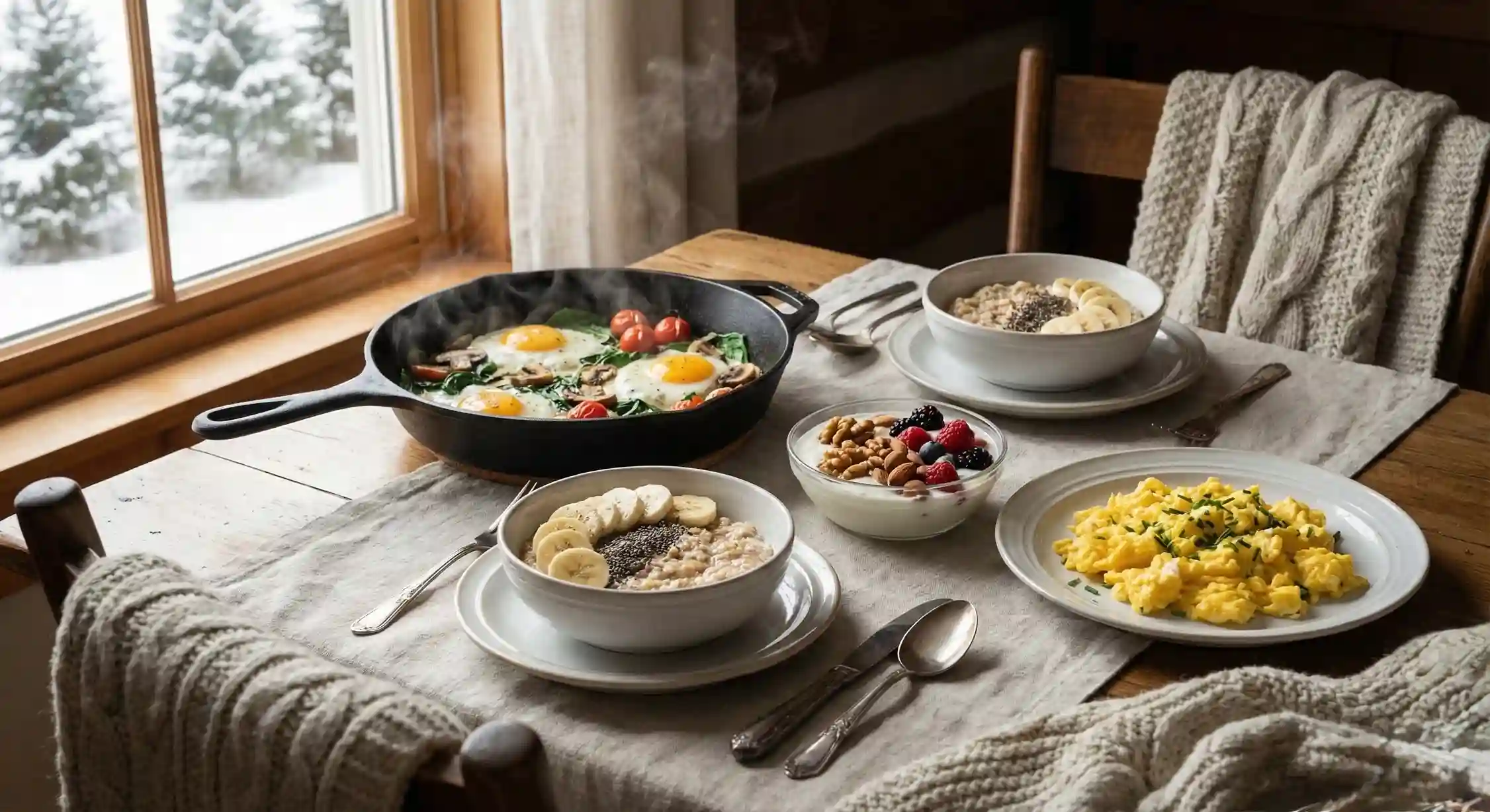
Cold mornings change what breakfast needs to do.
When it’s dark outside, the kitchen is chilly, and the day ahead looks long, a light breakfast just doesn’t cut it. Toast disappears by 10 a.m. A sugary cereal leaves you hungry before your first meeting. What works in summer often fails in winter.
Winter breakfasts need warmth, substance, and staying power especially protein that actually carries you through the morning without feeling heavy or complicated.
These breakfasts aren’t trendy, fancy, or built for photos. They’re American, practical, and filling, made from familiar grocery items and meant for real mornings.
Time Breakdown
What These Breakfasts Are And Aren’t
These are not bodybuilding meals or extreme high-protein plans. They’re also not brunch dishes that take an hour and a sink full of pans.
This is everyday winter breakfast food the kind Americans have relied on for decades when mornings are cold and schedules are full. The protein is there to keep hunger steady, not to dominate the plate.
Think:
- Warm
- Balanced
- Forgiving
- Easy to repeat week after week
Ingredient Snapshot
You’ll see these ingredients come up again and again because they work.
- Eggs
Reliable, affordable, and fast. Whole eggs provide protein plus fat, which matters for winter fullness. - Greek yogurt (plain)
Thick, high in protein, and easy to warm gently or pair with hot foods. - Oats
Not high-protein on their own, but excellent at holding protein-rich add-ins. - Cottage cheese
Mild, filling, and extremely protein-dense without feeling heavy. - Breakfast sausage (pork or turkey)
Used in small amounts to add protein and satisfaction, not grease. - Milk or fortified plant milk
Adds protein, warmth, and structure to cooked breakfasts. - Beans
Often overlooked at breakfast, but deeply American and very filling.
No specialty powders. No imported ingredients. And no supplements required.
Before cooking begins, the following technical standards define the temperature, heat, and storage limits used throughout this recipe.
Technical & Safety Reference
| Technical Variable | Requirement / Standard | Source Framework |
|---|---|---|
| Measurement system | U.S. customary units; temperatures in Fahrenheit | U.S. culinary standards |
| Egg cooking temperature context | Cooking temperatures expressed and controlled in °F (e.g., 350°F baking) | Culinary practice |
| Refrigerated storage duration | Cooked egg dishes stored up to 4 days under refrigeration | USDA-aligned food safety |
| Room temperature limit | Discard egg dishes left out over 2 hours | USDA food safety logic |
| Reheating constraint | Reheat gently to avoid drying and quality loss | Culinary handling standards |
| Food safety classification | Egg and dairy–based prepared foods require cold storage | USDA food safety framework |
Why High-Protein Breakfasts Work Better in Winter
Winter hunger behaves differently.
Cold temperatures and darker mornings often increase appetite and make quick carbs burn off faster. Protein slows digestion and helps steady blood sugar, which means less mid-morning hunger and fewer crashes.
Warm protein matters too. Hot eggs, oatmeal with dairy, or beans with fat feel more satisfying than cold smoothies or bars when it’s cold outside.
The goal isn’t maximum protein.
It’s enough protein, paired with warmth and fat, to last until lunch without distraction.
1. Scrambled Eggs with Cottage Cheese and Toast
Why it works: Eggs plus cottage cheese create a soft, filling scramble that stays moist and satisfying.
How to Make It
- Crack 2–3 eggs into a bowl and add 2 tablespoons cottage cheese.
You should see small white curds throughout the eggs. - Whisk lightly until just combined.
Don’t overmix streaks are fine. - Heat a nonstick skillet over medium-low heat and add butter.
The butter should melt quietly, not brown. - Add eggs and cook slowly, stirring gently, about 4–5 minutes.
The eggs should look soft and glossy. - Serve with whole-grain toast.
Common mistake:
Cooking too hot. High heat dries the eggs and defeats the point.
2. High-Protein Oatmeal with Milk and Peanut Butter
Why it works: Oatmeal alone fades fast. Milk and nut butter turn it into a real meal.
How to Make It
- Bring milk (not water) to a gentle simmer.
Steam should rise, not bubbles. - Stir in rolled oats and cook 5–7 minutes.
The oats should be thick and creamy. - Remove from heat and stir in peanut butter.
It should melt smoothly. - Add a pinch of salt and optional cinnamon.
Common mistake:
Skipping salt. Even sweet oatmeal needs it to taste satisfying.
3. Greek Yogurt Breakfast Bowl
Why it works: Greek yogurt is protein-dense and surprisingly comforting when not ice-cold.
How to Make It
- Warm frozen berries in a small saucepan until juicy.
They should release liquid but not boil hard. - Spoon Greek yogurt into a bowl.
- Top with warm fruit and a drizzle of honey.
- Add chopped nuts for texture.
Common mistake:
Heating the yogurt directly. It can break and turn grainy.
4. Breakfast Sausage and Egg Skillet
Why it works: A small amount of sausage adds protein and fat that keeps hunger quiet for hours.
How to Make It
- Brown sausage over medium heat until cooked through.
Look for golden edges. - Remove excess grease, leaving a thin coating.
- Add beaten eggs and cook gently.
The eggs should stay soft. - Finish with black pepper and toast on the side.
Common mistake:
Using too much sausage. A little goes a long way.
5. Cottage Cheese Toast with Warm Toppings
Why it works: Cottage cheese delivers protein without heaviness, especially on warm toast.
How to Make It
- Toast hearty bread until crisp.
- Spread cottage cheese generously.
- Top with warm sliced tomatoes or sautéed mushrooms.
- Finish with salt and olive oil.
Common mistake:
Using low-fat cottage cheese. Full-fat is more satisfying in winter.
6. Bean and Egg Breakfast Bowl
Why it works: Beans provide protein and fiber that last, especially when paired with eggs.
How to Make It
- Warm canned beans with olive oil and a pinch of salt.
- They should be hot and creamy.
- Fry or scramble eggs separately.
- Combine in a bowl and add pepper or hot sauce.
Common mistake:
Skipping fat. Beans need oil or butter to feel complete.
7. Baked Egg Muffins
Why it works: Easy to prep once and eat all week without sacrificing protein.
How to Make It
- Whisk eggs with milk and salt.
- Add cooked vegetables or sausage.
- Pour into greased muffin tin.
- Bake at 350°F for 18–22 minutes.
Centers should be just set.
Common mistake:
Overbaking. Dry eggs won’t keep you full.
Common Mistakes That Lead to Mid-Morning Hunger
- Too little fat
Protein without fat often fades fast in cold weather. - Cold breakfasts
Icy foods feel less satisfying in winter. - Relying on carbs alone
Toast and cereal need protein backup. - Skipping salt
Under-seasoned food feels less filling.
Practical Variations (American Kitchen–Friendly)
- Add shredded cheese to eggs for extra protein.
- Stir milk into scrambled eggs before cooking.
- Use leftover roasted vegetables in breakfast bowls.
- Pair any option with a glass of milk if hunger lingers.
No reinvention required.
Storage, Reheating & Food Safety
- Cooked eggs keep up to 4 days refrigerated.
- Reheat gently to avoid drying.
- Store yogurt and dairy tightly sealed.
- Discard any egg dishes left at room temperature over 2 hours.
Simple rules. No special handling.
How Americans Commonly Use These Breakfasts
These meals show up on:
- Work-from-home mornings
- School days
- Winter weekends
- Meal-prep Sundays
They’re eaten quickly, reheated often, and repeated without boredom. That’s the point.
A Calm Way to Think About Winter Breakfast
A good winter breakfast doesn’t need to impress anyone. It needs to be warm, steady, and reliable something you can make half-awake and trust to carry you through the morning. Protein helps, but comfort matters just as much. Get those right, and lunch can wait.
Editorial Transparency Statement
This article is research-based and informed by historical culinary references, established food science, and professional instructional standards. It does not rely on personal kitchen testing.
All content in this article is independently verified using authoritative and verifiable sources.
Sources used for this article:
- Fannie Farmer Cookbook — Historical context and foundational American breakfast standards.
- Joy of Cooking — Classic U.S. editions covering eggs, dairy usage, and breakfast preparation methods.
- USDA Food Safety and Inspection Service — Eggs & Egg Products — Verified egg handling, storage, and food safety standards for U.S. home kitchens.
These references ensure the content is research-backed, historically grounded in American home cooking, US-centric in ingredients and practices, and safe for everyday kitchen use.
Author