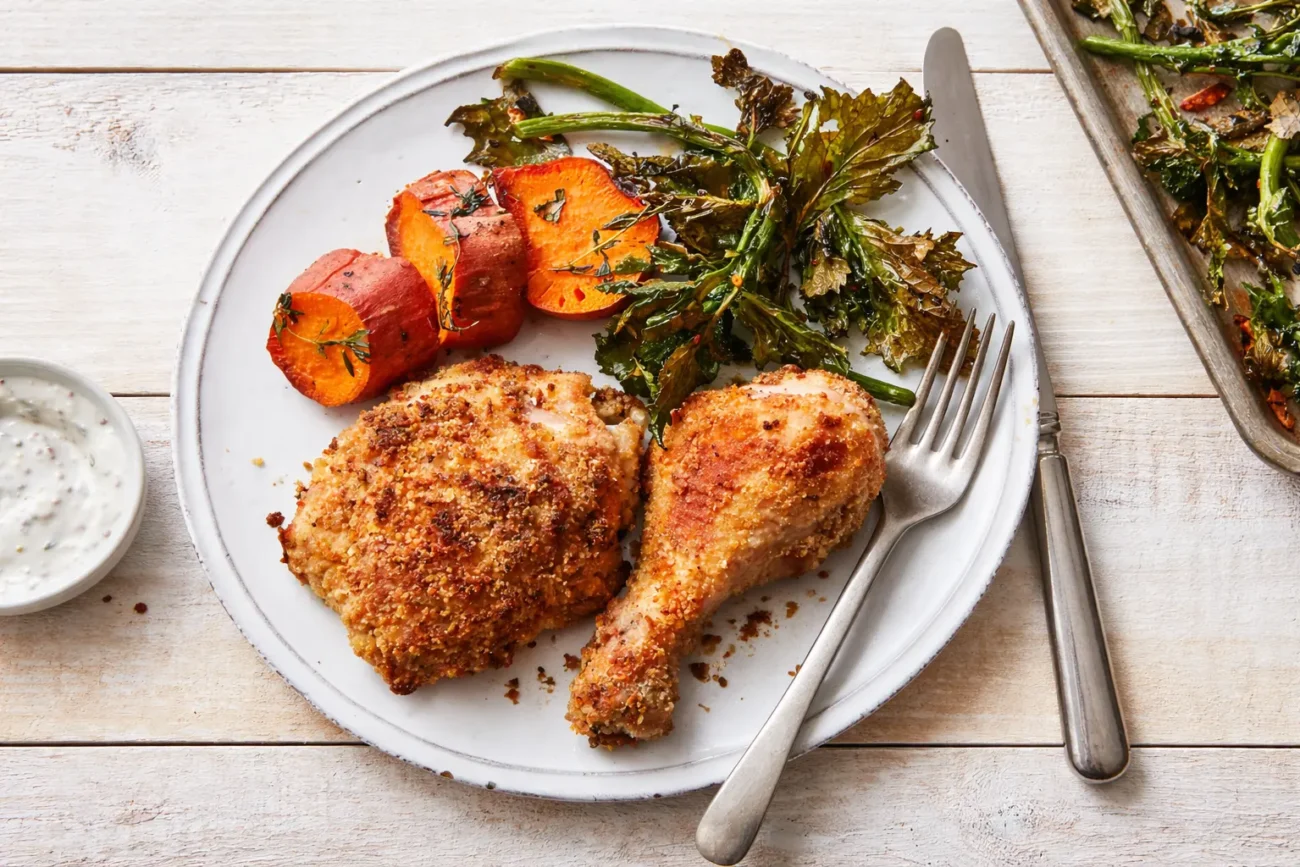
Chicken pieces arranged across a rimmed sheet pan and roasted at 425°F develop a browned exterior while vegetables nearby soften and caramelize. The result comes from dry circulating heat inside the oven.
Which encourages surface browning through the Maillard reaction while allowing rendered chicken fat to coat surrounding ingredients. When the pieces are spaced so that hot air can circulate freely, moisture evaporates rather than accumulating as steam, a difference that determines whether the chicken roasts or merely steams.
This principle explains why easy sheet pan chicken meals remain one of the most efficient weeknight cooking methods. A single pan exposes every ingredient to consistent heat, reducing the need for multiple burners while allowing proteins and vegetables to cook simultaneously. One practical rule governs the entire process: leave visible space between chicken pieces so evaporation can occur and browning can begin.
Why Chicken Thighs Handle High-Heat Roasting Best
Chicken thighs are particularly suited to sheet pan roasting because their intramuscular fat content protects the meat from drying out at temperatures above 400°F. While lean breast meat can lose moisture quickly under high heat, the fat present in thighs renders gradually during roasting. As the fat melts, it coats the meat and helps conduct heat evenly across the surface.
This fat rendering also contributes to browning. When rendered fat spreads across the pan, it transfers heat directly to the chicken skin and nearby vegetables, accelerating the Maillard reaction responsible for roasted flavor. For weeknight cooking where reliability matters, bone-in or boneless thighs tolerate the high temperature required for proper sheet pan roasting.
The High-Heat Roasting Method That Makes Sheet Pan Meals Reliable
The core method behind a dependable sheet pan chicken dinner relies on high heat and controlled spacing. Roasting at 425°F creates a cooking environment where surface moisture evaporates quickly. As water leaves the surface of the chicken and vegetables, the temperature of the exposed proteins and sugars can rise high enough to trigger browning reactions.
Lower oven temperatures slow this evaporation process, allowing steam to accumulate on the pan and preventing caramelization. Spacing matters just as much as temperature. When chicken pieces touch or overlap, trapped moisture forms a thin layer of steam that keeps the surface temperature below the threshold needed for browning.
Leaving small gaps between each piece allows dry oven air to circulate and carry moisture away. Together, these two factors, high heat and proper spacing, transform a simple sheet pan into a highly effective roasting surface.
The Weeknight Sheet Pan Formula: Protein, Fat, and Fast-Roasting Vegetables
A successful one pan chicken and vegetables meal depends on aligning cooking timelines.
Chicken thighs typically require 25 to 30 minutes to roast fully at 425°F. Vegetables chosen for the same pan should therefore caramelize within a similar window. Potatoes, carrots, broccoli, bell peppers, onions, and zucchini all roast well within that timeframe when cut into evenly sized pieces.
Oil serves an important role here. A thin coating of oil improves heat transfer between the pan and the ingredients while helping surfaces brown more efficiently. Salt also contributes by drawing small amounts of moisture from the surface of vegetables, allowing evaporation to begin more quickly once roasting starts.
When protein, fat, and vegetables are balanced correctly, a sheet pan becomes a self-contained cooking system capable of producing a complete dinner.
Four Easy Sheet Pan Chicken Meal Structures for Busy Nights
Once the core roasting method is understood, multiple quick sheet pan chicken recipe variations can be built from the same structure.
Lemon-Garlic Chicken with Broccoli
Chicken thighs coated with olive oil, garlic, and lemon zest roast alongside broccoli florets. The citrus oils brighten the roasted flavor while broccoli caramelizes at the same temperature as the chicken.
Paprika Chicken with Potatoes
Cubed potatoes tossed in oil and smoked paprika roast beside seasoned chicken thighs. As chicken fat renders, it coats the potatoes and promotes crisp edges.
Mediterranean-Style Sheet Pan Chicken
Chicken roasted with bell peppers, red onion, olives, and oregano produces a dish where vegetables soften while absorbing rendered chicken fat.
Honey-Mustard Chicken with Carrots
A mixture of honey, mustard, and oil coats the chicken while sliced carrots roast nearby. The sugars in the honey encourage surface browning while the carrots soften during the roasting process. Each variation uses the same high-heat roasting method, differing only in seasoning and vegetable selection.
Key Recipe Summary
Prep Time: 10 minutes
Cook Time: 25–30 minutes
Total Time: 35–40 minutes
Servings: 4
Cooking Method: High-heat sheet pan roasting
Primary Equipment: Rimmed sheet pan, mixing bowl, oven thermometer
Difficulty Level: Easy
Ingredients and Why They Work in High-Heat Roasting
Ingredients
- 2 pounds chicken thighs
- 2 tablespoons olive oil
- 1 teaspoon kosher salt
- ½ teaspoon black pepper
- 3 cups mixed vegetables (potatoes, broccoli, peppers, or carrots)
- Optional seasoning: garlic, paprika, oregano, lemon zest
Ingredient Function
Olive oil promotes browning by enabling direct heat transfer between the hot pan and the food’s surface. Salt enhances flavor while drawing small amounts of moisture toward the surface, helping evaporation occur once roasting begins.
Chicken thighs provide both flavor and structural reliability during roasting because their higher fat content reduces the risk of drying out. Vegetables with moderate density, such as potatoes, carrots, and broccoli, develop caramelized surfaces when exposed to the same high roasting temperature used for chicken.
Step-by-Step Sheet Pan Chicken Method
- Preheat the oven to 425°F.
High heat encourages evaporation and surface browning. - Prepare the chicken.
Pat the chicken dry with paper towels and coat lightly with olive oil, salt, and pepper. - Prepare the vegetables.
Cut vegetables into evenly sized pieces so they roast within the same 25–30 minute window as the chicken. - Arrange on the sheet pan.
Place chicken pieces on the pan with visible space between them. Scatter vegetables around the chicken in a single layer. - Roast for 25–30 minutes.
The chicken skin should appear browned and the vegetables lightly caramelized. - Check doneness.
Chicken is fully cooked when the thickest portion reaches an internal temperature of 165°F, the safe minimum recommended for poultry. - Rest briefly before serving.
Allow the chicken to rest for several minutes so juices redistribute before slicing or serving.
Storage and Reheating Without Losing Texture
Cooked sheet pan chicken can be stored in the refrigerator for 3 to 4 days when placed in an airtight container. To reheat while preserving texture, warm leftovers in a 350–375°F oven until heated through. This method restores surface crispness more effectively than microwave reheating.
The Physics Behind Why the Sheet Pan Method Endures
Sheet pan roasting remains one of the most dependable weeknight cooking techniques because it simplifies the physics of heat exposure. A wide, flat surface allows ingredients to absorb consistent radiant heat while fat rendered from the chicken spreads across the pan and promotes additional browning. At the same time, moisture evaporates directly into the oven air rather than collecting in a confined cooking vessel.
This balance of evaporation, heat transfer, and fat distribution explains why a single sheet pan can produce both properly roasted chicken and caramelized vegetables in the same cooking cycle, a structure that turns a simple method into a reliable dinner system.
Editorial Transparency Statement
This article is research-based and informed by culinary science, official guidelines, and food safety standards. The recipe follows established roasting techniques and standard kitchen practices used in professional cooking references.
- FoodSafety.gov: Cold Food Storage Chart for Cooked Chicken and Poultry
- USDA FoodData Central: Nutritional Reference Data for Chicken Thighs
- Serious Eats: The Science of the Maillard Reaction and Browning in Cooking
- Epicurious: Cooking Chicken Thighs in the Oven: Timing and Roasting Method
- America’s Test Kitchen: Roasting Vegetables and Proper Ingredient Spacing Techniques
- USDA Food Safety and Inspection Service: Safe Minimum Internal Temperature for Poultry (165°F)
