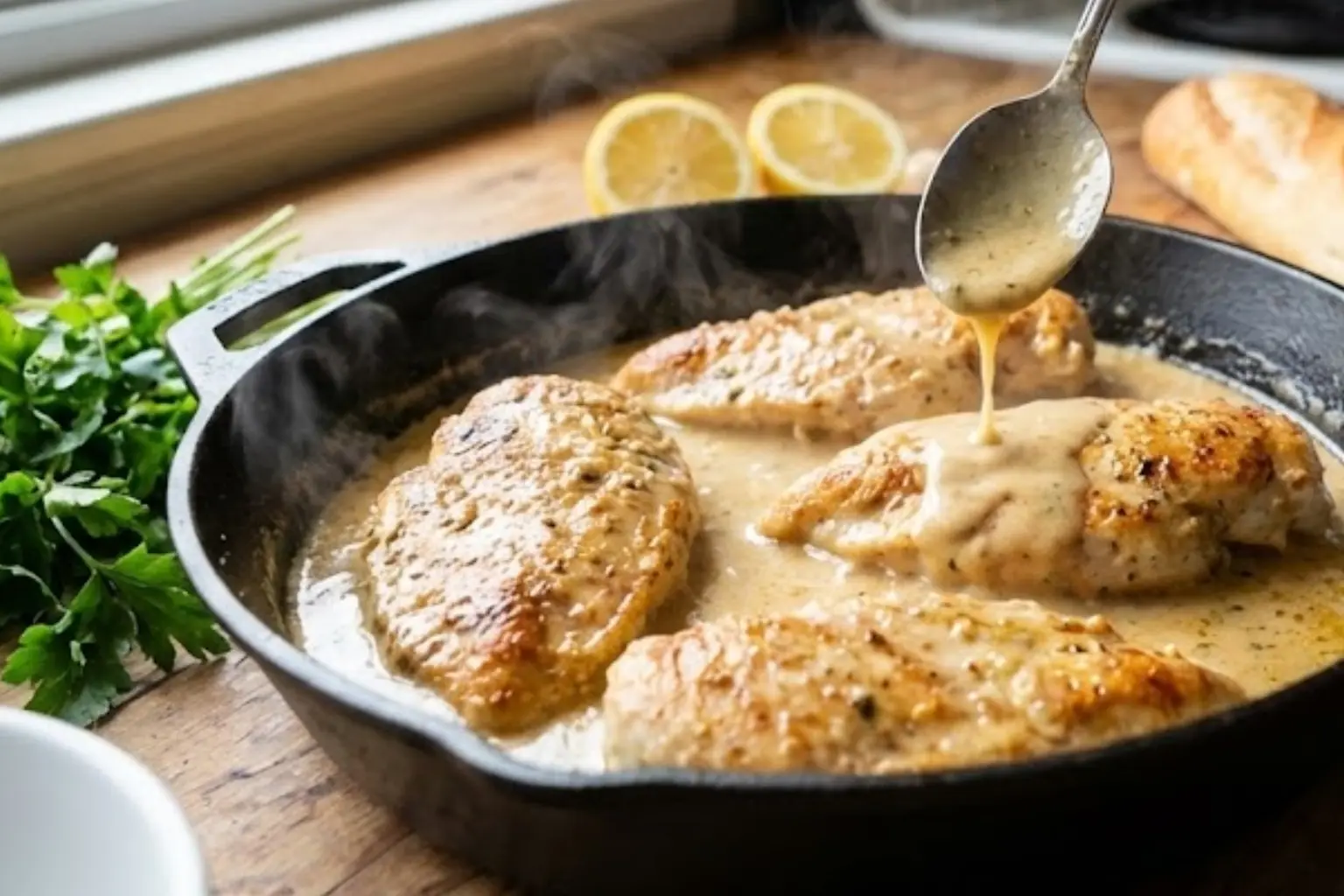
Some nights the chicken is cooked perfectly, but it still feels unfinished. It’s hot, it’s tender and somehow it tastes plain. This creamy garlic butter sauce exists for that exact moment.
In about ten minutes, familiar ingredients turn into something rich, smooth, and comforting without feeling heavy. It’s the kind of sauce American home cooks reach for when they want dinner to feel intentional, even when the plan was simple from the start.
Time Breakdown
What This Is And Isn’t
This is a fast, stovetop garlic butter sauce designed for everyday American cooking. It’s smooth, stable, and forgiving, meant to be spooned over chicken that’s already cooked or nearly finished. The method relies on gentle heat and timing, not technique.
This is not a restaurant-style emulsified sauce, a cream reduction that needs constant attention, or a chef-driven experiment. It’s a practical home-kitchen sauce built to work the same way every time.
Ingredient Snapshot
- Unsalted butter: Forms the flavor base and carries the garlic
- Garlic (fresh, minced): Provides the main savory note
- Heavy cream: Creates body and smooth texture
- Grated Parmesan cheese: Adds depth and gentle saltiness
- Salt: Balances richness
- Black pepper: Adds mild warmth
- Italian seasoning (optional): Familiar herbal background
- Chicken broth (optional): Loosens the sauce if needed
Before cooking begins, the following technical standards define the temperature, heat, and storage limits used throughout this recipe.
| Technical Variable | Requirement / Standard | Source Framework |
|---|---|---|
| Measurement system | U.S. customary units | U.S. cooking standards |
| Primary heat level | Medium heat for butter and garlic; reduced heat for cream | Culinary science |
| Garlic heat limit | Garlic cooked until fragrant, not browned | Culinary science |
| Cream handling | Heated gently; boiling avoided to prevent separation | Culinary science |
| Refrigerated storage duration | Up to 3 days in an airtight container | USDA food safety guidelines |
| Reheating constraint | Reheated gently until steaming; boiling avoided | USDA food safety guidelines |
| Food safety classification | Cooked dairy-based sauce | USDA food safety guidelines |
Why It Works
This sauce works because it builds richness gradually. Butter melts first, giving garlic a gentle environment to release flavor without browning. Cream is added over moderate heat so it thickens naturally instead of separating.
Parmesan melts slowly, adding structure and depth without turning grainy. By keeping the heat controlled and adding ingredients in order, the sauce stays smooth, balanced, and easy to adjust for different chicken dishes.
Step-by-Step Method
Method overview: This sauce comes together quickly, but each step matters. The process focuses on gentle heat, short cooking times, and visual cues rather than aggressive simmering. Butter creates the base, garlic builds aroma, cream forms the body, and cheese finishes the texture. The sauce is meant to coat the back of a spoon, not reduce heavily. Once finished, it’s ready to be spooned directly over chicken or gently simmered alongside it.
1. Melt the butter
Place a skillet over medium heat and add the butter. Let it melt slowly until fully liquid and lightly foamy, but not browned. This creates a warm base that protects the garlic from burning. You should see gentle bubbles, not sizzling or color change, before moving to the next step.
2. Add the garlic
Add the minced garlic to the melted butter and stir continuously. Cook just until fragrant, keeping the heat steady. The garlic should soften and release aroma without turning golden. This step builds flavor gently and sets the tone for the entire sauce.
3. Pour in the cream
Lower the heat slightly and slowly pour in the heavy cream, stirring as you go. This helps the butter and cream combine smoothly. Let the mixture warm until it begins to steam lightly, but do not let it boil. The sauce should look uniform and glossy.
4. Season lightly
Add salt, black pepper, and Italian seasoning if using. Stir well and allow the sauce to simmer gently. At this stage, the flavor should be mild and balanced, since the cheese will add more salt and depth in the next step.
5. Add the Parmesan
Sprinkle in the grated Parmesan gradually, stirring constantly. Allow it to melt fully before adding more. This slow addition prevents clumping and keeps the sauce smooth. The sauce should begin to thicken slightly and coat the back of a spoon.
6. Adjust the texture
If the sauce feels too thick, add a small splash of chicken broth and stir until smooth. If it feels too thin, let it simmer gently for another minute. The goal is a pourable, creamy consistency that clings lightly to chicken.
7. Finish and serve
Remove the skillet from heat and give the sauce a final stir. Taste and adjust seasoning if needed. Spoon the sauce over cooked chicken immediately or return the chicken to the pan and warm gently until coated and glossy.
Common Mistakes to Avoid
- Browning the garlic, which makes the sauce bitter
- Boiling the cream, causing separation
- Adding all the cheese at once, leading to clumps
- Over-reducing the sauce until it becomes heavy
Variations (US-Relevant Only)
- Steakhouse-style: Add a small pat of butter at the end
- Lemon-garlic: Finish with a squeeze of lemon juice
- Herb-forward: Stir in chopped parsley or thyme
- Lighter version: Replace part of the cream with chicken broth
Storage, Reheating & Food Safety
- Storage: Refrigerate in an airtight container up to 3 days
- Reheating: Warm gently over low heat, stirring often
- Safety: Do not boil when reheating; heat until steaming
How Americans Commonly Use This
This sauce is most often used as a quick upgrade for pan-seared or baked chicken breasts, especially on busy weeknights. It’s also popular for skillet meals served with pasta, mashed potatoes, or rice.
Many home cooks use it as a finishing sauce something added at the end to bring everything together rather than something cooked for a long time. Its familiarity makes it easy to pair with vegetables and simple sides.
A Calm Finish
This sauce isn’t meant to impress with technique. It works because it’s reliable, fast, and built around ingredients most kitchens already have. When chicken needs a little help, this is the kind of solution that quietly delivers without adding stress to dinner.
Editorial Transparency Statement
This article is research-based and informed by historical culinary references, established food science, and professional instructional standards. It does not rely on personal kitchen testing.
- How Korean Barbecue Became an American Obsession — Smithsonian Magazine
- Leftovers and Food Safety — United States Department of Agriculture
- Cookbooks and Home Economics Archive — New York Public Library Digital Collections
Author