Some dinners feel like a small relief the moment you see them simmering on the stove.
Porcupine meatballs are one of those meals.
They’re the kind of recipe that quietly stretches a pound of ground beef into a full family dinner no shortcuts, no tricks, just smart American home cooking. Rice swells inside the meat, tomato sauce thickens gently, and everything cooks together until the pan smells warm, familiar, and steady.
This is old-school comfort food in the best way. Simple. Filling. Calmly reliable.
Time Breakdown
What This Is And What It Isn’t
This is the classic American porcupine meatball, the one that showed up in mid-century home kitchens and community cookbooks across the country.
It’s not a restaurant-style meatball.
It’s not tender from fancy techniques or loaded with herbs.
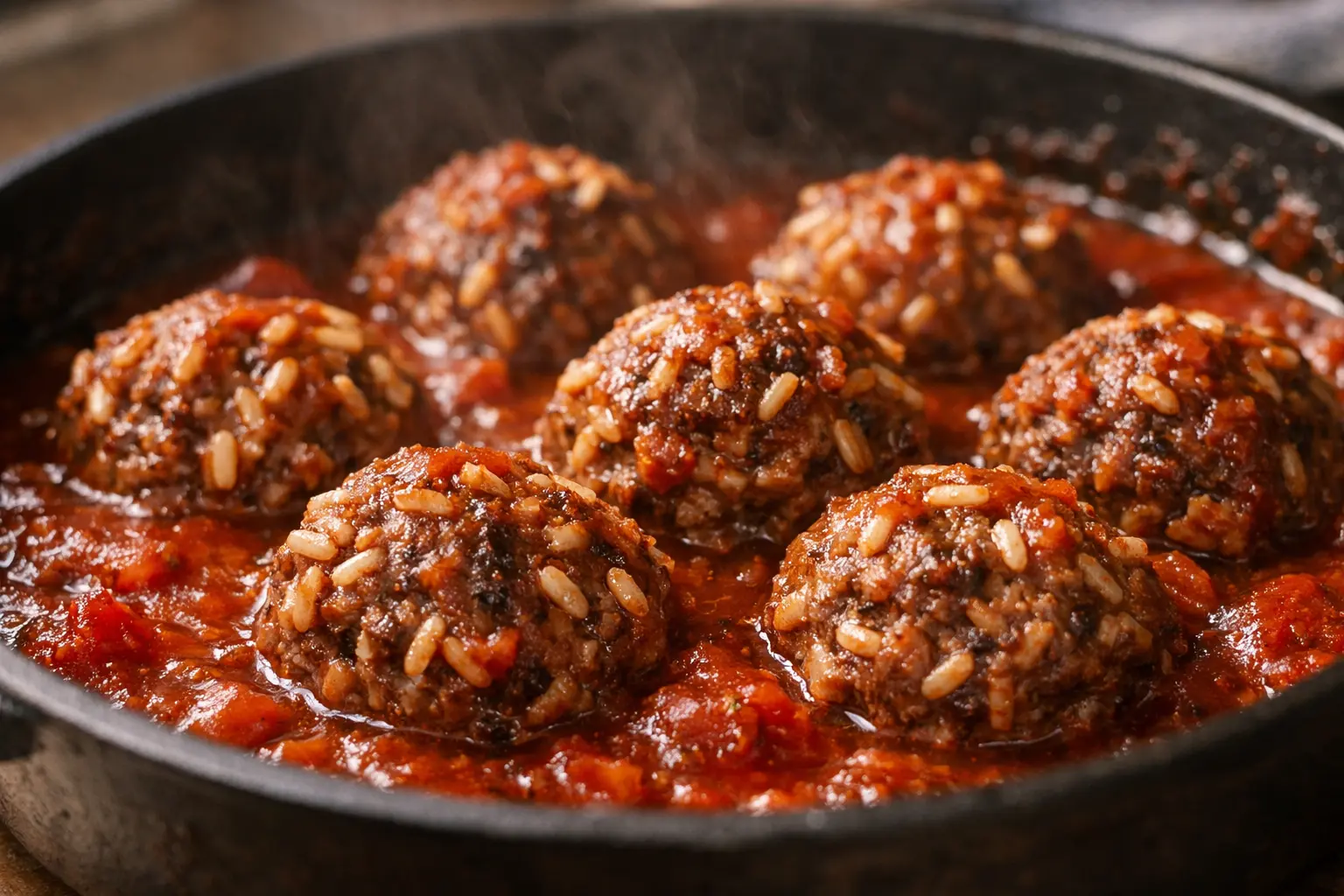
Instead, it’s practical cooking meat, rice, tomato sauce designed to feed people well with what’s on hand. The rice cooks inside the meatballs, poking out slightly as it softens, which is where the name comes from.
This recipe is forgiving, economical, and meant for weeknight dinners not presentation.
Ingredient Snapshot
- Ground beef (1 pound)
Standard American 80/20 works best here. The fat keeps the meatballs moist as the rice cooks. - Uncooked long-grain white rice (½ cup)
This expands inside the meatballs and turns one pound of beef into a full meal. - Onion (½ cup, finely chopped)
Adds sweetness and moisture without overpowering the sauce. - Egg (1 large)
Helps hold the meatballs together as the rice cooks and expands. - Salt and black pepper
Straightforward seasoning nothing fancy needed. - Tomato sauce (2 cups)
A classic American pantry sauce that gently simmers the meatballs. - Water (½ cup)
Helps the rice fully cook inside the meatballs.
Before cooking begins, the following technical standards define the temperature, heat, and storage limits used throughout this recipe.
Technical & Safety Reference
| Technical Variable | Requirement / Standard | Source Framework |
|---|---|---|
| Safe internal temperature | Meatballs cooked to an internal temperature of 160°F | USDA Food Safety Guidelines |
| Primary cooking method | Covered stovetop simmer at low heat | Culinary Practice |
| Heat level control | Gentle simmer; avoid rapid boiling | Culinary Science |
| Storage duration (refrigerated) | Store cooked meatballs up to 4 days in a sealed container | U.S. Food Safety Standards |
| Freezing duration | Fully cooked meatballs frozen up to 3 months | U.S. Food Safety Standards |
| Reheating requirement | Reheat until steaming hot throughout | Food Safety Guidelines |
| Measurement system | U.S. customary units only | Editorial Standard |
Why This Works
Porcupine meatballs succeed because everything cooks together, at the same pace.
The raw rice absorbs liquid from the tomato sauce as the meatballs simmer. That moisture steams the inside gently, keeping the beef tender while the rice softens. The sauce thickens naturally as starch releases into the pan.
There’s no browning step here and that’s intentional. Simmering from the start keeps the meatballs cohesive and prevents the rice from drying out before it cooks through.
It’s slow, steady heat doing quiet work.
Step-by-Step Method
Mix the meatball base
In a large bowl, combine the ground beef, uncooked rice, chopped onion, egg, salt, and pepper. Mix gently with your hands until just combined. You should still see separate grains of rice don’t overmix.
Shape the meatballs
Roll the mixture into golf-ball-sized meatballs, about 1½ inches wide. Place them on a plate as you work.
They should feel firm but not tight.
Prepare the sauce
In a wide, deep skillet or saucepan, stir together the tomato sauce and water. Bring it to a gentle simmer over medium heat.
Add the meatballs
Nestle the meatballs into the simmering sauce in a single layer. Spoon a little sauce over the tops so they’re lightly coated.
Cover and simmer
Reduce the heat to low, cover, and simmer for 40–45 minutes. You’ll see small rice grains poking out as they cook that’s normal.
Check doneness
The meatballs are ready when they’re firm, the rice is tender, and the sauce has thickened slightly. Internal temperature should reach 160°F.
Rest briefly before serving
Let the meatballs sit in the sauce for 5 minutes off heat before serving. This helps everything settle and thicken.
Common Mistakes to Avoid
- Using instant rice
It cooks too quickly and turns mushy before the meat is done. - Skipping the water
The rice needs extra liquid to cook fully inside the meatballs. - Cooking at too high a heat
Fast boiling can split the meatballs before the rice softens. - Overmixing the meat
This makes the meatballs dense instead of tender.
Variations (American-Style Only)
- Beef and pork blend
Swap half the beef for ground pork for a slightly richer result. - Bell pepper addition
Finely chopped green bell pepper adds sweetness common in Midwestern versions. - Oven-baked finish
After stovetop simmering, transfer to a covered baking dish and bake at 350°F for 15 minutes to thicken the sauce further.
Storage, Reheating & Food Safety
- Refrigerate leftovers in a sealed container for up to 4 days.
- Reheat gently on the stovetop or microwave with a splash of water or sauce.
- Freeze fully cooked meatballs for up to 3 months. Thaw overnight before reheating.
Always reheat until steaming hot throughout.
How Americans Commonly Use This Dish
Porcupine meatballs are usually served simply:
- Over mashed potatoes
- With buttered egg noodles
- Alongside green beans or corn
- As a weeknight family dinner that reheats well
It’s practical food the kind that fits easily into real schedules.
A Calm Way to End the Day
Porcupine meatballs aren’t flashy. They don’t need to be. They’re steady, familiar, and quietly generous the kind of dinner that shows how American home cooking learned to make less feel like enough. And that’s exactly why they’ve lasted.
Editorial Transparency Statement
This article is research-based and informed by historical culinary references, established food science, and professional instructional standards. It does not rely on personal kitchen testing.
All content in this article is independently verified using authoritative and verifiable sources. These references ensure the article is research-backed, historically accurate, US-centric, and safe for home cooking.
Sources used for this article:
- New York Public Library: Community Cookbooks Collection — Mid-20th century American home-cooking practices and economical family meals.
- Fannie Farmer Cookbook (Historical Editions) — Foundational reference for classic American meatball preparation and pantry-based cooking.
- USDA Food Safety Guidelines — Verification of safe internal cooking temperatures and home food storage standards.
These sources ensure the content is accurate, reliable, and consistent with U.S. culinary and food safety standards for home kitchens.
Author