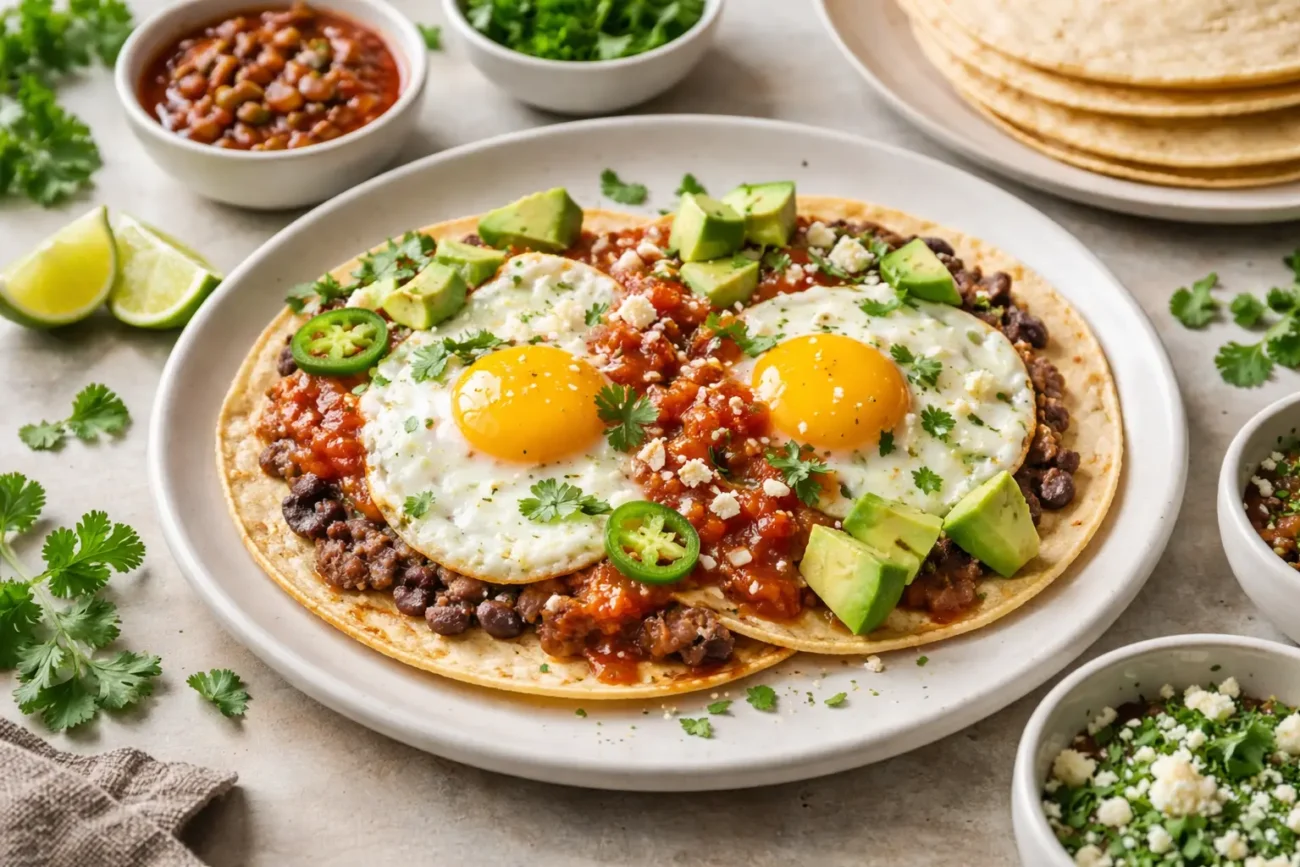
Huevos rancheros has become a staple in American kitchens because it delivers real comfort without unnecessary effort. It’s warm, saucy, and filling in a way that feels intentional rather than rushed.
The combination of eggs, tortillas, and a gently simmered tomato sauce turns a simple morning into something more satisfying.
This is the kind of breakfast people make when they want bold flavor without complicated steps. It feels familiar, reliable, and built for real-life mornings.
Time Breakdown
What This Is And Isn’t
This recipe is the American home-kitchen version of huevos rancheros, designed for consistency and ease. It focuses on practical technique rather than regional purity or restaurant presentation.
This is not a delicate, plated brunch dish that depends on perfect timing or specialty tools. It also isn’t an experimental or chef-driven interpretation.
Instead, it’s a calm, dependable method that works with standard grocery ingredients and everyday cookware.
Ingredient Snapshot
- Corn tortillas: Softened in oil so they stay tender and absorb the sauce without falling apart.
- Large eggs: Cooked gently until the whites are set and the yolks remain rich.
- Canned crushed or diced tomatoes: Creates a stable, reliable base for the sauce.
- Yellow onion: Adds natural sweetness and body as it cooks down.
- Garlic: Provides aroma and depth without sharpness.
- Jalapeño or mild green chile: Optional, for gentle heat that doesn’t overpower the dish.
- Ground cumin: Used sparingly to add warmth and balance.
- Neutral oil: Supports tortilla softening and sauce development.
- Salt: Brings all components into balance.
Before cooking begins, the following technical standards define the temperature, heat, and storage limits used throughout this recipe.
Technical & Safety Reference
| Technical Variable | Requirement / Standard | Source Framework |
|---|---|---|
| Cooking heat level | Medium to medium-low stovetop heat used for sauce simmering and egg cooking | Culinary practice |
| Egg doneness indicator | Egg whites fully set; yolks remain soft | Culinary science |
| Acid reduction standard | Tomato sauce simmered until acidity softens and flavor concentrates | Culinary science |
| Storage duration (refrigerated) | Leftovers stored in an airtight container for up to 2 days | U.S. food safety guidelines |
| Refrigeration window | Refrigerate cooked food within 2 hours | USDA-aligned food safety |
| Reheating constraint | Reheat gently until hot; yolks may firm during reheating | Food safety guidelines |
| Measurement system | U.S. customary units and Fahrenheit temperatures | U.S. culinary standards |
Why It Works
This dish works because the cooking order protects every component. The sauce is simmered first, allowing its acidity to soften and its flavor to concentrate before the eggs are added. Softened tortillas act as a buffer, absorbing sauce while maintaining structure.
Cooking the eggs directly in the sauce shields them from direct heat and prevents overcooking. When finished, the skillet feels unified, with no single element overpowering the others.
Step-by-Step Method
1. Soften the Tortillas
Heating the tortillas briefly in a thin layer of oil keeps them flexible and prevents cracking once they’re added to the sauce. This step also adds a light richness that helps the tortillas absorb flavor without becoming soggy. The goal is softness, not browning or crisp edges. Each tortilla should bend easily when lifted from the pan. Set aside once warmed to avoid drying.
2. Build the Sauce Base
Cooking the onion slowly allows its natural sweetness to develop before the tomatoes are added. This creates a smoother, more balanced sauce without sharp edges. Garlic and chiles are added at the end of this step so they release aroma without turning bitter. The pan should smell savory, not harsh. Keep the heat moderate to maintain control.
3. Simmer the Sauce
Adding the tomatoes and seasoning begins the transformation from raw ingredients to a cohesive sauce. Gentle simmering thickens the mixture slightly and softens the acidity of the tomatoes. Stirring occasionally prevents sticking and promotes even cooking. The sauce should darken slightly in color. This stage sets the foundation for the entire dish.
4. Add the Tortillas
Nestling the tortillas into the simmering sauce allows them to absorb flavor from both sides. Spoon sauce over the top so no dry spots remain. This step softens the tortillas further while helping them hold their shape. They should feel tender but intact. Avoid pressing them down too aggressively.
5. Cook the Eggs
Cracking the eggs into shallow wells keeps them centered and evenly spaced. Covering the skillet traps steam, allowing the whites to set gently without overcooking the yolks. The heat should remain medium-low for control. Whites should look opaque while yolks stay soft. Remove from heat as soon as the eggs reach the desired doneness.
6. Finish and Serve
Removing the skillet from heat prevents carryover cooking. Any toppings are added at this stage so they stay fresh and bright. The dish should be served hot, directly from the pan. Textures are best when eaten immediately. This final step locks in balance and consistency.
Common Mistakes to Avoid
- Sauce tastes sharp or acidic: The sauce likely didn’t simmer long enough to mellow.
- Eggs turn rubbery: Heat was too high or cooking time was too long.
- Tortillas break apart: They weren’t softened before being added to the sauce.
- Dish tastes flat: A final small pinch of salt is often needed.
Variations Americans Commonly Use
- Steakhouse-style: Finish with butter and shredded Monterey Jack or cheddar.
- Bean-forward: Add black or pinto beans under the eggs for extra heartiness.
- Garlic-heavy: Increase garlic slightly for a bolder, savory profile.
- Mild breakfast version: Skip the chile entirely for a family-friendly skillet.
Storage, Reheating & Food Safety
- Refrigerate promptly: Place leftovers in the refrigerator within 2 hours of cooking.
- Storage duration: Keep in an airtight container for up to 2 days.
- Reheating method: Warm gently on the stovetop or in the microwave until hot.
- Yolk texture: Egg yolks will firm up when reheated, which is expected and safe.
How Americans Commonly Use This
Huevos rancheros is often served as a weekend breakfast when there’s time to enjoy a warm skillet at the table. Many families also make it as a brunch alternative instead of going out. It’s common as a “breakfast for dinner” option because it’s filling without feeling heavy.
The dish fits easily into casual family meals and relaxed mornings. Its flexibility makes it easy to adjust for different preferences at the table.
Soft, Confident Close
Huevos rancheros succeeds because it doesn’t try to be more than it needs to be. When the sauce is balanced, the tortillas are tender, and the eggs are cooked gently, the dish delivers exactly what people expect.
It’s warm, dependable, and deeply satisfying without requiring special techniques. This version is built for consistency, not perfection. It’s the kind of recipe that earns its place in regular rotation.
Editorial Transparency Statement
This article is research-based and informed by historical culinary references, established food science, and professional instructional standards. It does not rely on personal kitchen testing.
All content in this recipe is independently verified using authoritative and verifiable sources. These references ensure the recipe is research-backed, historically grounded, US-centric in ingredients and usage, and safe for everyday home cooking.
Sources used for this recipe:
- New York Public Library Digital Cookbooks Collection — Historical references for American home-style egg and tomato-based breakfast dishes.
- Library of Congress: American Cookbooks Collection — Verification of traditional ingredient usage and home-kitchen preparation methods.
- USDA Food Safety Frameworks — Egg cooking safety, refrigeration guidance, and reheating standards.
These references ensure the content aligns with established American home cooking practices, verified food safety standards, and historically accurate ingredient handling without relying on personal kitchen testing.
Author