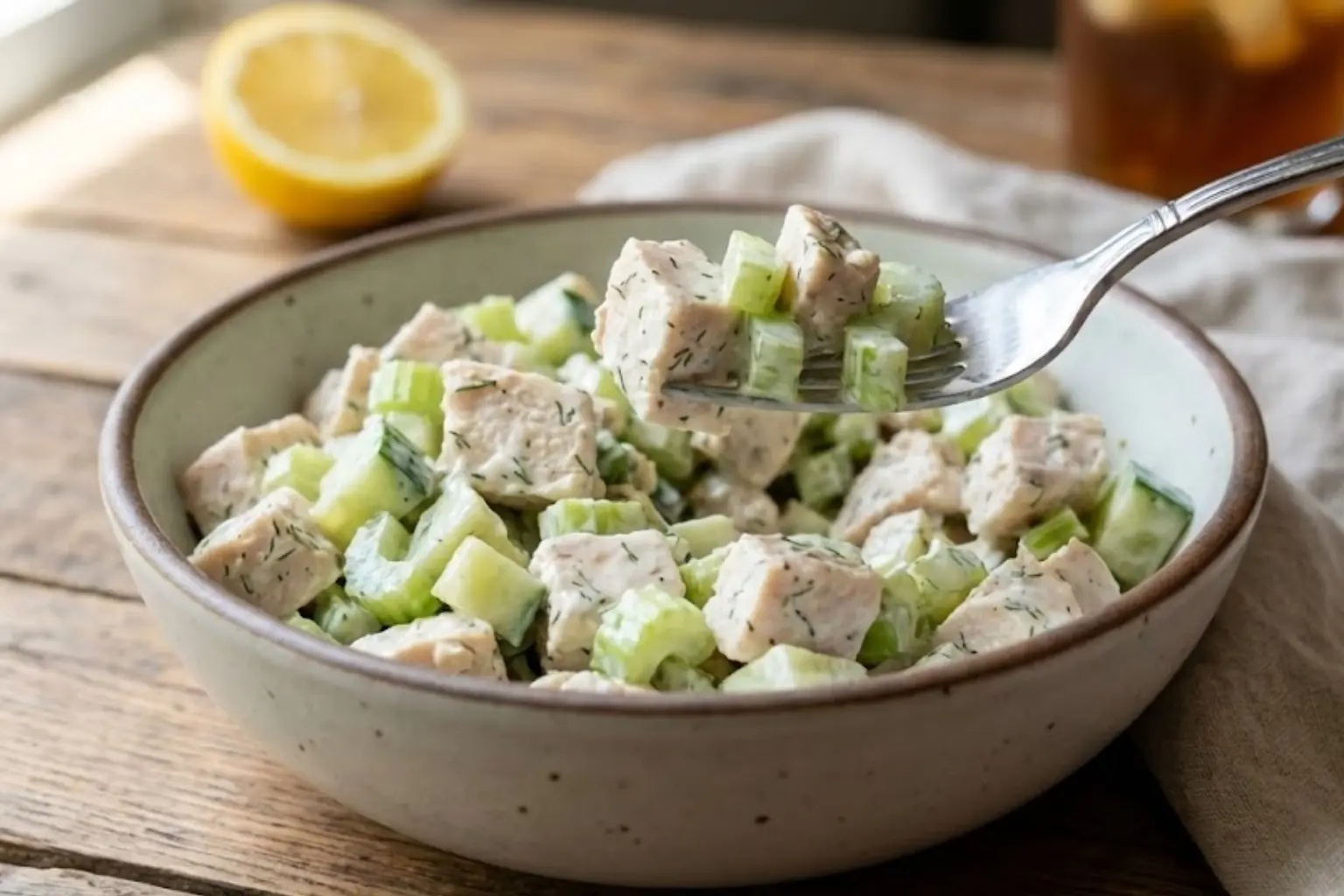
By lunchtime, most chicken salads promise protein but deliver something dense, oily, or overly rich. The kind that tastes fine at first and then sits heavy for the rest of the afternoon.
This one doesn’t.
It’s the style of chicken salad that shows up at American delis, office lunches, and family refrigerators for a reason: filling without being rich, satisfying without feeling weighed down. The texture stays clean. The flavor stays bright. And it works just as well tucked into a sandwich as it does eaten straight from a bowl.
This is a high-protein lunch that feels light not because it’s trying to be “healthy,” but because it’s built the right way.
Time Breakdown
What This Is And Isn’t
This is a classic American chicken salad, optimized for protein and balance.
It’s not a low-fat imitation.
It’s not a diet version.
And it’s not a restaurant-style, overly dressed mixture.
Instead, this is the everyday home-kitchen approach that American cooks have relied on for decades: lean chicken, restrained dressing, crisp add-ins, and enough structure to hold together without turning pasty or greasy.
It’s forgiving, flexible, and designed to be eaten cold straight from the fridge without losing texture or flavor.
Ingredient Snapshot
- Cooked Chicken Breast (USDA-inspected)
Lean, neutral, and high in protein. Breast meat keeps the salad light and clean-tasting. - Mayonnaise (Regular, Not Reduced-Fat)
Used sparingly for cohesion, not heaviness. Full-fat mayo binds better with less volume. - Celery
Adds crunch and freshness. Keeps the texture from feeling dense. - Red Onion or Scallions
A small amount brings sharpness without overpowering the chicken. - Dijon or Yellow Mustard
Brightens the dressing and balances the richness of the mayo. - Fresh Lemon Juice or Apple Cider Vinegar
Just enough acidity to lift the entire salad. - Kosher Salt
Enhances flavor without making the salad taste salty. - Black Pepper
Adds mild heat and depth. - Optional Add-Ins (Choose One)
Plain Greek yogurt for extra protein, Fresh herbs like parsley or dill Seedless grapes, halved for contrast
Before cooking begins, the following technical standards define the temperature, heat, and storage limits used throughout this recipe.
Technical & Safety Reference
| Technical Variable | Requirement / Standard | Source Framework |
|---|---|---|
| Food safety classification | Cooked poultry, cold-served preparation | USDA-aligned food safety |
| Storage duration (refrigerated) | 3–4 days in an airtight container | USDA Food Safety Guidelines |
| Room-temperature holding limit | Maximum 2 hours | USDA Food Safety Guidelines |
| Reheating constraints | Reheating not recommended; intended for cold consumption | Food safety guidelines |
| Service temperature | Served chilled after refrigeration | Traditional U.S. culinary practice |
| Measurement system | U.S. customary units (cups, tbsp, °F) | Editorial standard |
Why It Works
Chicken salad feels heavy when the dressing does all the work.
This version flips that balance.
Lean chicken provides structure and protein. Crisp vegetables introduce air and texture. The dressing is measured just enough to coat, not drown. Acid keeps the flavors sharp, which makes the salad feel lighter on the palate even though it’s still satisfying.
Using full-fat mayonnaise in a smaller amount matters here. It binds efficiently, so you need less of it. Reduced-fat alternatives often require more volume, which leads to a heavier mouthfeel.
Cutting the chicken properly also makes a difference. Bite-sized pieces with clean edges absorb dressing evenly instead of turning mushy.
The result is a salad that eats clean, stays cold well, and doesn’t feel like a compromise.
Step-by-Step Method
Start With Fully Cooled Chicken
Use cooked chicken that has cooled completely. Warm chicken releases moisture, which can thin the dressing and make the salad watery.
Cut, Don’t Shred
Dice the chicken into small, even pieces using a knife. Avoid shredding. Why it matters: Diced chicken holds structure and keeps the salad from feeling pasty.
Prep the Crunch
Slice celery thinly across the grain. Mince onion or scallions finely.
Mix the Dressing Separately
In a bowl, whisk together mayonnaise, mustard, lemon juice (or vinegar), salt, and pepper. Timing: 30–45 seconds of whisking.
Combine Gently
Add chicken and vegetables to the dressing. Fold gently with a spatula.
Adjust, Don’t Overcorrect
Taste once. Adjust salt or acidity in small amounts only.
Chill Briefly Before Serving
Cover and refrigerate for at least 20 minutes. Why it matters: Chilling firms the texture and blends flavors without dulling freshness.
Common Mistakes to Avoid
- Using Warm Chicken
This leads to excess moisture and a loose, heavy texture. - Overdressing
If the salad looks shiny or pooled at the bottom, it’s overdressed. - Shredding the Meat
Shredded chicken absorbs too much dressing and turns dense quickly. - Skipping Acid
Without lemon or vinegar, the salad tastes flat and heavier than it is. - Overmixing
Too much stirring breaks down the chicken and vegetables.
Variations (US-Relevant Only)
- Steakhouse-Style
Add finely chopped celery leaves and a pinch of black pepper. Serve on toasted white bread. - Deli Classic
Fold in halved seedless grapes and a small amount of finely chopped pecans. - Protein-Boosted
Replace 2 tablespoons of mayo with plain Greek yogurt for extra protein without added heaviness. - Herb-Focused
Add fresh parsley or dill for a brighter, fresher finish.
Storage, Reheating & Food Safety
- Store in an airtight container in the refrigerator.
- Keeps well for 3-4 days when properly chilled.
- Do not leave at room temperature for more than 2 hours.
- This salad is designed to be eaten cold. Reheating is not recommended.
Always use clean utensils when serving to maintain freshness and safety.
How Americans Commonly Use This
This style of chicken salad shows up everywhere for a reason.
- It’s packed into sandwiches for work lunches.
- Scooped onto crackers for quick meals.
- Served over greens for light dinners.
- Prepped on Sunday and eaten all week.
It fits into real schedules and real kitchens not just special occasions.
Soft, Confident Close
A good chicken salad doesn’t try to impress. It just works.
When the balance is right, it fills you up without slowing you down. It holds its texture. It tastes clean straight from the fridge. And it earns its place as a dependable, high-protein lunch that doesn’t feel heavy even after you’ve finished eating.
Editorial Transparency Statement
This article is research-based and informed by historical culinary references, established food science, and professional instructional standards. It does not rely on personal kitchen testing.
All content in this recipe is independently verified using authoritative and verifiable sources.
Sources used for this recipe:
- Joy of Cooking (historical editions) — Verified traditional American chicken salad ratios, restrained dressing usage, and cold-service preparation practices.
- Fannie Farmer Cookbook (Boston Cooking-School Cook Book, digitized editions) — Confirmed period-accurate American salad construction, ingredient simplicity, and home-kitchen standards.
- USDA Food Safety & Storage Guidelines for Cooked Poultry — Verified refrigeration timelines, cold-holding safety limits, and handling standards for U.S. home kitchens.
These references ensure the recipe is research-backed, historically accurate, U.S.-centric, and safe for home cooking.
