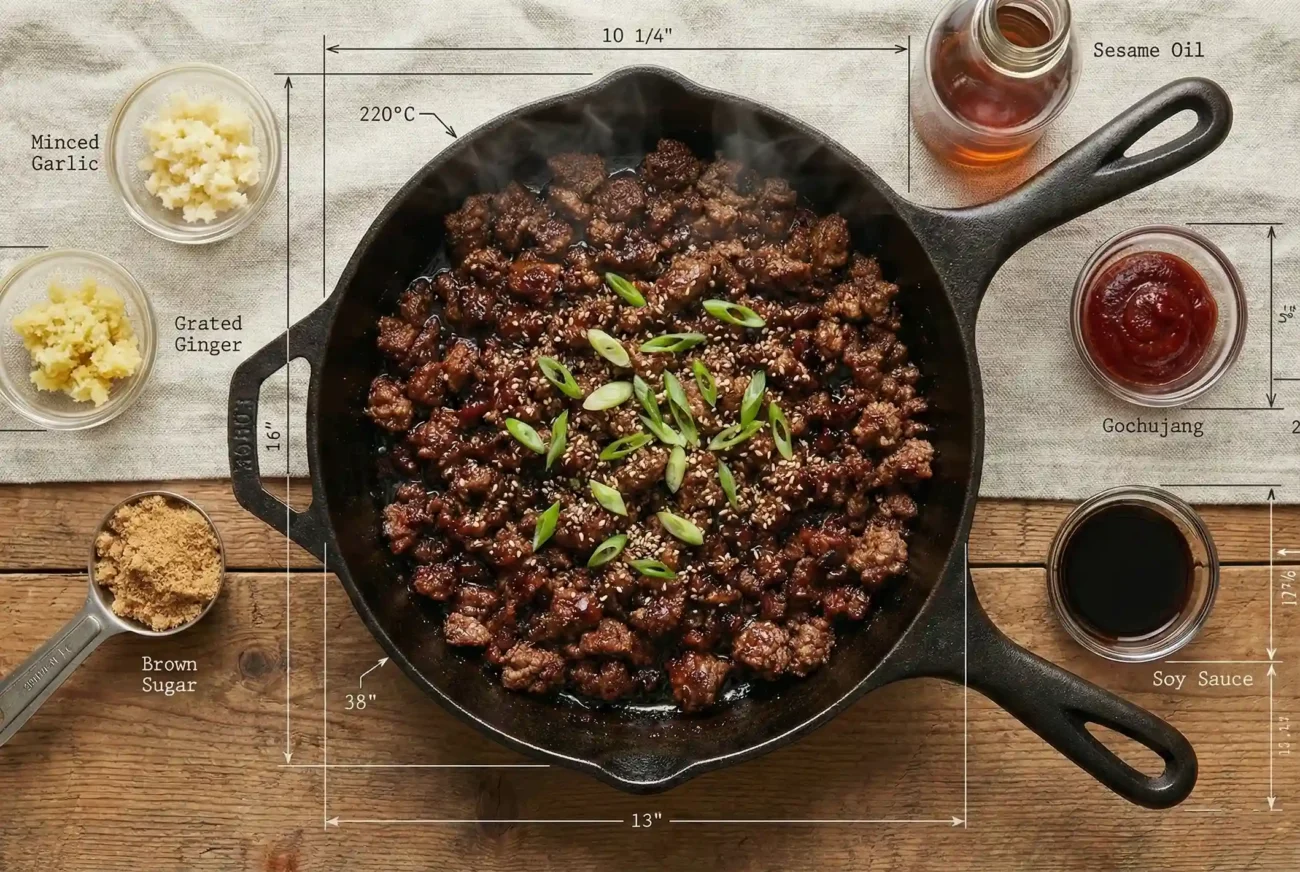
Some nights, you don’t want to cook, you just want dinner to happen fast and still taste like someone cared. You want something savory and familiar, without committing to a long recipe or a pile of dishes.
That’s exactly where this Korean beef bowl fits. It’s bold but balanced, cooked in one pan, and ready in about 15 minutes. The flavors are comforting and confident, not fussy, the kind of meal that works on a busy weeknight and still feels like a real dinner.
This is the bowl many American kitchens lean on when rice is already going and everyone’s hungry now.
Time Breakdown
What This Is And Isn’t
This is not a traditional Korean bulgogi recipe.
It’s the American home-kitchen version, fast, flexible, and built around ground beef you can find anywhere. The flavors are inspired by classic Korean profiles, but the method is designed for weeknights, not restaurant prep.
There’s no marinating.
No specialty cuts.
No hard-to-find ingredients.
What you get instead is a reliable bowl that comes together quickly and tastes intentional every time, even if you’re cooking on autopilot.
Ingredient Snapshot
- Ground beef (80/20 or 85/15): Juicy, flavorful, and sturdy enough for a quick sauce
- Garlic: Adds savory depth once the beef is browned
- Fresh ginger or ground ginger: Brings warmth and balance
- Soy sauce: Provides salt and umami backbone
- Brown sugar: Soft sweetness that rounds the sauce
- Sesame oil: Aromatic finish added off heat
- Cooked white or jasmine rice: Neutral base that absorbs sauce
- Green onions (optional): Fresh contrast
- Sesame seeds (optional): Light texture and nuttiness
Before cooking begins, the following technical standards define the temperature, heat, and storage
limits used throughout this recipe.
Technical & Safety Reference
| Technical Variable | Requirement / Standard | Source Framework |
|---|---|---|
| Measurement system | U.S. customary units | U.S. Editorial Standard |
| Cooking heat level | Medium-high to medium-low stovetop cooking | Culinary Practice |
| Aroma oils usage | Sesame oil added off heat (finish only) | Culinary Science |
| Storage duration (refrigerated) | 3–4 days in airtight container | USDA Food Safety Guidelines |
| Reheating requirement | Reheat until hot throughout / steaming | USDA Food Safety Guidelines |
| Leftover handling | Rice and beef stored separately | Food Safety Best Practice |
Why It Works
Ground beef cooks quickly and releases fat as it browns. Instead of draining it away, that fat becomes part of the sauce, carrying the soy, sugar, and aromatics evenly through the meat.
Adding the garlic and ginger after the beef starts browning keeps their flavor rounded instead of sharp. When garlic hits a very hot pan too early, it can turn bitter fast. Here, timing does the work for you.
The brown sugar dissolves into the moisture already in the pan, creating a glossy coating rather than a separate sauce that slides off the meat. A short simmer brings everything together without thickening or reducing too far.
The sesame oil goes in last, off the heat. It’s there for aroma, not cooking. That final step is what makes the dish smell finished the moment it hits the bowl.
Everything moves quickly, but nothing feels rushed.
Weeknight Timing Tip
If your rice cooker or pot is already going, this dish can realistically be finished before the rice is done resting. Start the beef when the rice has about 15 minutes left, and everything lines up without waiting.
Step-by-Step Method
Build the bowls
Spoon hot rice into bowls and top with the beef. Finish with green onions and sesame seeds if you like.
Heat the pan
Set a large skillet over medium-high heat for about 30–45 seconds. The pan should feel hot when you hover your hand a few inches above it, and a drop of water should sizzle right away.
Brown the beef
Add the ground beef and break it apart with a spatula. Spread it into an even layer and let it cook undisturbed for 2–3 minutes until the bottom develops color. Stir and continue cooking until mostly browned, about 4–5 minutes total.
Add garlic and ginger
Push the beef to one side of the pan. Add the garlic and ginger to the open space and stir for 20–30 seconds until fragrant. Fold into the beef before it darkens.
Season and simmer
Pour in the soy sauce and sprinkle the brown sugar evenly over the meat. Stir well and let the mixture simmer for 2–3 minutes, until the liquid reduces slightly and coats the beef.
Finish gently
Lower the heat to medium-low. Add crushed red pepper or gochujang if using. Turn off the heat and drizzle in the sesame oil, stirring gently to combine.
Common Mistakes to Avoid
- Crowding the pan
If the beef steams instead of browns, the flavor stays flat. Use a wide skillet and let it sear. - Adding garlic too early
Garlic burns quickly. Waiting until the beef browns keeps it fragrant, not bitter. - Overdoing the sesame oil
Sesame oil is powerful. Too much can overwhelm the dish instead of finishing it. - Skipping the brief simmer
Letting the sauce reduce helps it cling to the beef instead of pooling in the bowl. - Using very lean beef
Extra-lean ground beef can cook up dry here. A little fat helps carry flavor and keeps the texture tender.
Variations (U.S.-Relevant)
- Vegetable Boost
Stir in frozen peas, shredded carrots, or thin-sliced bell peppers during the last 2 minutes of cooking. - Low-Carb Bowl
Serve over cauliflower rice or shredded cabbage. - Extra-Spicy Version
Add more gochujang or finish with chili crisp. - Family-Style Dinner
Serve with steamed broccoli or snap peas on the side.
Make-Ahead & Scaling
This recipe scales easily without changing the method.
To double it, use a wider skillet or cook the beef in two batches so it still browns instead of steaming. Combine everything at the seasoning step and finish as written.
For make-ahead meals, cook the beef fully and store it separately from the rice. When reheating, warm the beef gently and add a splash of water if needed to loosen the sauce.
The flavors hold up well, which makes this dish especially useful for planned leftovers or packed lunches.
Storage, Reheating & Food Safety
- Store leftover beef in an airtight container in the refrigerator for up to 3–4 days.
- Reheat gently on the stovetop or in the microwave until hot throughout. If it looks dry, add a tablespoon of water while reheating.
- Cool rice quickly, store it separately, and reheat until steaming hot before serving.
How Americans Commonly Use This
For many households, this is a reliable weeknight dinner, especially on nights when the fridge is low but ground beef is on hand.
It’s also a common meal-prep option. The beef reheats well and pairs easily with different vegetables throughout the week, which keeps lunches from feeling repetitive.
In family kitchens, it’s often served build-your-own style. Kids can skip the heat, adults can add extra spice, and everyone gets a bowl that works for them.
It’s practical, flexible, and dependable, exactly what most home cooks are looking for midweek.
Calm, Confident Close
This Korean beef bowl isn’t about shortcuts, it’s about using familiar ingredients in the right order. It’s fast, forgiving, and steady, even on nights when cooking feels like a stretch.
When dinner needs to happen quickly but still feel like a real meal, this one delivers.
Editorial Transparency Statement
This article is research-based and informed by historical culinary references, established food science, and professional instructional standards. It does not rely on personal kitchen testing.
- USDA-aligned food safety and storage guidelines – https://www.fsis.usda.gov/
Author